Tuesday 2026-10-27
03:00 PM
Pumpkin flavored news [F-Droid - Free and Open Source Android App Repository]
This Week in F-Droid
TWIF curated on Sunday, 25 Oct 2026, Week 43
Community News
@thore pinged us for a big update of Ente Locker:
Ente Locker now has document scanning, powered by what looks like copying FairScan’s code from Kotlin to Rust, surely that won’t end up in a drama:
…grab some popcorn.
@Licaon_Kter brings a post about 10 apps worth installing. It’s a 19 minutes read, but if you don’t have the time, here’s the TL;DR: Exodus, NewPipe, Fennec, Aegis, KeePassDX, Syncthing-Fork, AntennaPod, Phonograph Plus, Tusky, and Qalculate.
L_K notes that Proton VPN - Secure and Free VPN has a new app added with reproducible builds enabled. The old app id will still get updates. Yet, naming an app “non-reproducible” made users confused, they technically are both reproducible, it’s just a question of who signed the package. Historically, the now named “non-reproducible” one is signed by F-Droid because when added, years ago, the app could not be made reproducible. But it went through a full rewrite, and the new codebase is much modern and easier to reproduce. We are in contact with the developers, they are aware and we will work with them to somehow combine both in a way that users like.
@shuvashish76 reminds us of an update of Aard2 after 2 years. It includes a redesign with Material You and many other updates. Take a look at the changelog for more details.
And BatteryBot Pro was updated after 5 years. If you’ve been using it for so long you also got a present, unfortunately. The app won’t update, so you’ll need to uninstall the old version and install the latest.
Archived Apps
22 apps were archived
- Blichess: Play lichess games over Bluetooth
- Box Stacker: Box Stacker is a physics-based construction puzzle game.
- CountryCount: Track countries, visualize your progress, and explore where you’re going next.
- EhViewer NekoInverter: An E-Hentai Application for Android with censorship circumvention (A Policy issue)
- EstudiaTAI: Practice tests for the Spanish AGE IT Assistant exams.
- FastTrack: Track what your body is doing while fasting (Will come back in the next cycle)
- Forage: A shopping list front-end to your self-hosted Mealie instance.
- Lane’s Lexicon: An Arabic English Dictionary
- LibreAAC: Private, offline AAC communication using open OBF and OBZ boards
- MRT Buddy: Check your Dhaka MRT / Rapid Pass balances and trips instantly
- Navic: A modern Navidrome client for Android and iOS (Developer feels that F-Droid’s goals no longer match theirs)
- OpenAvisio: Beta companion for your self-hosted OpenAvisio medical-record instance
- Openlib: download and read books from shadow library (Anna’s Archive)
- OpenVK Legacy: OpenVK Legacy is mobile client for retro devices running Android >2.1.
- PDF Wallet: Simple PDF Wallet for your most important PDFs
- PocketDhamma: An offline reader for the Dhammapada.
- SharedHaven: Bitcoin wallet with secure multisig features
- Shots Studio: AI powered screenshots manager and organizer
- Spell4Wiki: Audio upload tool for Wiktionary words to Wikimedia Commons & Wiki-Dictionary
- Tidy: A task management app with all necessary features
- Volume Control: Quiet Dial: Volume buttons broken? Minimum too loud? Slider goes below it. Phones, tablets. (See Navic)
- WikWok: Learn something new with every swipe!
Newly Added Apps
130 apps were newly added
- Alpha GPS: Transmit your phone’s location to Sony cameras over Bluetooth for geotagging
- Artificial Koi: Living trigonometric creatures: a generative, truly live wallpaper
- ASComplete: OpenStreetMap Anti-Surveillance survey app for Android
- Astro Strike: Twin-stick space combat in 2D and 3D with wraparound arenas
- Ayni: See the glucose of someone who shares it with you
- Beanbook: Plain-text accounting for Beancount, on your phone, with no account.
- BikeRoutePlanner: Plan bike routes with bbbike, save them as GPX and navigate in OsmAnd
- BookOrbit: Your self-hosted ebook & audiobook library client.
- Boop: Pop a nearby person’s bubble. A tiny Boop over Bluetooth, with no Internet
- Bosun: Configure MIDI Captain pedals from your phone
- Brix: Free and open IRL streaming from your phone, on the move
- Bucharest Transit: Real-time Bucharest public transport, without Google.
- Burkan: Keeps your Galaxy S23 on the Vulkan renderer, even after a restart
- CableSnap: Workout tracker for cable machine workouts
- CamEscape: Map surveillance cameras from OpenStreetMap and plan routes that avoid them
- Clavier Tuner: Piano tuning from the piano in front of you: measured, not assumed
- Contact: Calling and messaging with built-in emergency tools
- Daak: Send files and text between your own devices over Wi-Fi. No account.
- DailyBeat: Keep a local journal of your journeys, places and notes
- Dayfile: Take notes about your daily life
- DebForge: Download from TorBox, Real-Debrid, AllDebrid, Premiumize and Debrid-Link
- DesKilo: Coworking community app: desk booking + shared money, libre.
- Dreeve Upload: Upload FIT & GPX fitness activities to your self-hosted Dreeve instance
- duckAssist: Lightweight, privacy-focused WebView wrapper for Duck.ai
- Euphony: Euphony — a beautiful, ad-free music streaming client for Android
- EVB Folder Player: Offline audiobooks from your folders, with saved progress and large controls
- Faz agora!: Tasks, subtasks and reminders with optional WebDAV synchronization.
- FPInk: Capture handwritten fountain-pen notes, recognized offline by default
- Freqcast: Internet radio player that finds streams by pasting a station’s website
- Ghost — Onion Search: Tor onion search aggregator. Privacy-first, RAM-only, no tracking.
- Goo-goo ga-ga: AI translator with deep linguistic insights and offline language detection
- GridLoad: Shows when to run your appliances, based on the dynamic electricity price
- GrooveForge: MIDI synth with soundfonts, 92 microtonal scales, and offline band rehearsals
- Gruzzolo: Gamified savings: a regular goal, medals and spending read from statements
- Headset Rewind: Hold your headset’s voice-command button to rewind active media
- HomeTiles: Big, calm home screen with phone and messages built in
- I.C.E Out: Community safety reporting — anonymous ICE activity tracking
- InkOrb: Physical ball painting: layers, pigment mixing, export.
- InterTune: Material 3 local music player and YouTube Music client
- JabraLibre: Offline ANC / HearThrough switcher and battery monitor for Jabra Elite 10
- JemRec: Call recorder for unrooted Android: both sides, no root, no companion app
- Keep SIM Alive: Scheduled keep-alive SMS so prepaid, roaming or backup SIMs stay active
- KeepNotes for Nextcloud: Google Keep-inspired client for Nextcloud Notes
- Keycard Pal Offline: Sign Ethereum and Bitcoin by QR code with a Keycard NFC smart card
- KidOrb: Soothing painting for kids: roll a ball of color across the screen.
- KMySync: Mobile companion for KMyMoney — record cash expenses on the go
- Knotwork: build your agent: An AI agent that runs on your phone and asks before it acts
- Kokoro Android system TTS driver: Text-to-speech engine that speaks through your own Kokoro server
- Launch-R: Find your space.
- LE-RADAR: Student newspapers and campus radio from Québec, in one feed
- Leftovers: Private expense tracker: log in two taps and see what is safe to spend today.
- Life Dashboard Companion: Health Connect and screen time to Home Assistant, MQTT or webhooks. No cloud.
- Link QR Wallet: Turn URLs into QR codes and save them in a searchable offline library
- Linkstow: Unofficial Karakeep client: read, sort and clean up your self-hosted bookmarks
- M9: SMS messaging for D-pad and T9 keypad phones
- Marmalade STT: Private, offline speech-to-text for your keyboard. Your voice stays on device.
- Mesh+ for Meshtastic: Chat over Meshtastic radios with no internet or cell service. Simple, private.
- MileLog: Mileage, expense and revenue tracker for self-employed drivers
- MinimalSF: Fast, minimal, monochrome home screen. Type to launch. No ads, no tracking.
- Misga: Smart SMS app with regex filters to eliminate spam in Iran
- monostr: Nostr client with Monero tips. No Lightning, no custodian, no wallet inside.
- MoodyRoutine: Samsung One UI-style Modes and Routines automation engine for Android.
- Nanna Baby Monitor: Baby monitor to stream privately between your own phones and computers
- NasManager: Unofficial companion client for TrueNAS SCALE: dashboard, graphs, alerts, apps
- Navi: Offline-first navigation with terrain-aware eco routing
- NearNote: Offline notes with location-based reminders, folders, and timeline
- NER Cycle App: Local cycle evaluation per the NER rules (Rötzer) — data stays on device.
- Nextcloud Photo Widget: Home screen widget showing random photos from your Nextcloud
- nfcGuard: Block distracting apps with NFC tags. Focus, screen time, digital wellbeing.
- Nooto: Cross-platform, privacy-focused notes with end-to-end encryption
- Not App: One icon, many shortcuts — a customizable command center for your home screen.
- OneSpend: Expense and budget tracker that works offline, with optional self-hosted sync
- OpenBanners Overlay: Route map overlay and mission tracker for Ingress mission banners.
- OpenJump: Analyze jumps and exercise velocity from video, offline
- Osmosis: Copy photos and videos off DJI Osmo cameras over Bluetooth and Wi-Fi
- OSRS Wiki: Unofficial Old School RuneScape wiki reader with offline save and map
- PairFree: One light app for earbuds of many brands. No account, no internet, no tracking
- Palimpsest: Encrypted notes, diary and to-dos with hidden vaults behind one password
- Pappus Travel Planner: From the plan to the settle-up — everything your trips involve
- Parakeetype: Fast on-device speech-to-text keyboard and voice input - no cloud, no tracking.
- Path : Step Counter: Lightweight, privacy-first step tracker. No tracking, no ads, 100% open source.
- Peace Break: A retro arcade brick breaker with online scores and unlockable skins.
- Pinry client: Browse and pin to your self-hosted Pinry server
- Pipes: Water Flow Puzzle: Tap and rotate pipes to solve the water network. Relaxing offline logic puzzles!
- pitcher: Change the key of any song, keep the tempo. Tuner, loops, speed. Offline.
- Pocket Sense: Private, offline money tracker in Jordanian dinars, in English and Arabic
- Prepper: Offline emergency preparedness inventory manager with barcode scanning
- ProjectM Android: MilkDrop music visuals for phones and tablets
- ProjectM TV: MilkDrop music visuals for Android TV
- PSBDx SVN: Subversion (SVN) client with biometric-locked credentials
- PsyJournal: Keep track of substance usage to gain insights on consumption patterns
- QOwnNotes: Offline Markdown notes synchronized safely with Nextcloud
- QR Jukebox: Offline audio player for QR-linked music. Ideal for music trivia board games.
- QT Lab: Interactive quantum mechanics wave-function simulator.
- Ridm: Ridm is a powerful, open-source media download manager supporting 9 languages
- RWR: onlooker alert: Warns you when someone behind you looks at your screen (shoulder surfing)
- Sakayori Music: Material 3 YouTube Music client for Android
- Seca Phone: Private dialer: telemarketing filter, blocked profiles, SIM per contact
- SG AOD: Custom always-on display with a clock, battery, notifications and music status
- SharkDroid: Capture and analyze network packets with Wireshark tools on Android
- Shelf: Hide folders instantly behind a working decoy app. Root optional.
- Shelfly: A TV shows & movies tracker that backs up to your own WebDAV server
- SlashFacts: Multiplication tables 2–9: see, remember, slash the answer.
- SmartVoice: Multilingual speech synthesis
- StarPath: Live Google Maps turns for Amazfit watches and Zepp devices.
- SubRead Dictionary: Pop-up dictionary for Yomitan dictionaries, from the text menu of any app
- SubRead Overlay: Subtitles (.srt) over any media player, in time with it. Tap a word.
- Supernova Launcher: A deeply customizable, offline home screen with gestures, folders and a feed.
- TableChips: Chips for a card table. One phone hosts; guests join from a browser, offline.
- TagMacro: Tap an NFC tag to run actions, or write tags for Wi-Fi, links and contacts
- Tetherbug: Your Mac turns on your phone’s hotspot when its Wi-Fi disconnects. No taps.
- Torrent Player: Stream and download torrents directly on Android with external media players.
- TPMS Libre: Offline tyre pressure and temperature for JK Tyre Treel TPMS sensors, no login
- TV Launcher: Lightweight, low-RAM Android TV home launcher
- Twig: Dual-pane file manager: archives, SFTP, SMB, WebDAV, S3, restic, Jellyfin
- Unfurlit: Open social-media links in a private native media viewer
- Vario: Aircraft-like altimeter and variometer with GPS, terrain and barometer modes.
- VirtualNet: Choose what each app sees: Wi-Fi, mobile data, or both. Xposed module.
- VIVATLAS: Your self-hosted catalogue of AI skills, agents and MCP servers, in your pocket.
- Wake Me: Alarm clock for alternating weeks, timetables and rules like every 1st Tuesday
- WallosMobile: Unofficial Android client for the Wallos subscription tracker
- Wallpaper Moe: Automatic wallpaper changes from online collections or your own favorites
- WeatherGrid: A clean, modern 3-hour forecast grid widget for your home screen.
- WGControl: Automated WireGuard tunnel control via home Wi-Fi and Bluetooth.
- Wishday: Birthday reminders that text people for you, by SMS, Signal or WhatsApp
- WLVD: WLVD - World Labour Values Database panel
- Wraith for Odysseus: Unofficial Android client for your self-hosted Odysseus AI server
- Zahlenschatzjagd: Maths practice for school years 1 and 2 – offline, ad-free, in German
- SubRead Anki: Select a word in any app: an Anki card with its sentence, picture and sound
Updated Apps
357 apps were updated
(expand for the full list)- 3X-UI Manager was updated to
0.15.4 - 99Managers Futsal Edition was updated to
v0.9.3 - AA-AuralListen Podcatcher was updated to
1.3.4 - ADB Captain was updated to
1.6 - AeroPayout was updated to
1.0.12 - Aftergleam - academic papers was updated to
1.3.0 - AIPOS Password Manager was updated to
1.6.1 - Airplane Scheduler was updated to
1.1.4 - AirPlay Server was updated to
0.0.33 - AliasVault was updated to
0.31.1 - Amadz - Calling App was updated to
1.1.8 - Amaze File Manager was updated to
3.11.4 - Amber was updated to
6.6.9 - Amethyst was updated to
1.19.0 - AnkiDroid: Flashcards was updated to
2.25.3 - APODroid was updated to
0.5.0 - App Blocker: Curbox Detox was updated to
6-fdroid - AppStow was updated to
3.0.3 - ARK-launcher was updated to
0.8.8 - Aster Mail: Encrypted Email was updated to
1.0.13 - Atmo Engine was updated to
7.3.7 - AutoPie was updated to
0.19.3-beta - Aves Libre was updated to
1.15.6 - AwayDoomscrollin’ was updated to
1.3.0 - Balance was updated to
1.19.0 - baresip was updated to
93.1.6 - baresip+ was updated to
82.1.7 - BasicSync was updated to
3.24 - Bati: Fitness RPG was updated to
2.12.3 - Beam was updated to
2.1 - BLACKBOX was updated to
2.0.7 - Block Blast was updated to
1.0.5 - BlowTorch 2 was updated to
2.4.8 - Boky Fivavahana Anglikana was updated to
2.6.1 - Bona vortaro was updated to
0.4 - Breakout 71 was updated to
29856654 - Brevier was updated to
0.14.0 - Bubble Notice was updated to
1.0.9 - Bura was updated to
1.9.2 - Butterfly was updated to
2.6.1 - C2K — Couch to 5K & 10K was updated to
1.2.22 - Caffeine Health was updated to
2.5.0 - Cams was updated to
2.5.2 - Cartes IGN was updated to
3.5.17 - Casio G-Shock Smart Sync was updated to
42.9.12 - Celestia was updated to
26.10.0 - ChemSearch was updated to
1.16.0 - Chocola was updated to
4.4.6 - Chogan was updated to
0.9.0 - Chompass - Calorie Tracker was updated to
5.7.1 - Clock was updated to
2.34 - CloudSound - SoundCloud facilitator for Podcini.A was updated to
1.0.7 - CPR Beat was updated to
0.4.0 - Cube Run was updated to
2.8 - Cycluna was updated to
1.1 - Daily You was updated to
3.7.0 - DankChat was updated to
4.0.45 - DAVx⁵ was updated to
4.5.21-ose - Daybook: Daily Logic Puzzles was updated to
0.1.139 - DayCalcy was updated to
3.43.6 - DBase Downloader was updated to
1.0.15 - DeltaSync was updated to
0.4.6 - Device Watch was updated to
1.9.0 - Dhwani - Volume Control was updated to
1.3.0 - Dragon Launcher was updated to
4.5.2 (Komodo) - DragTree was updated to
1.8.0 - Drift // Audio was updated to
0.5.1 - Droidrops was updated to
2.2.23 - droidVNC-NG was updated to
2.22.1 - DSub2000 was updated to
5.8.0-rc1 - DuckDuckGo Privacy Browser was updated to
5.297.0 - DumberKit: Calculator was updated to
1.1.0 - Easy Diary was updated to
1.4.352.202610020 - Easy Watermark was updated to
3.0.4 - Ebb was updated to
0.7.0 - EbookConverter was updated to
1.2.0 - Enclavd was updated to
2.2.1 - Encly: Encrypted Offline Notes was updated to
2.2.1 - Energize was updated to
0.15.0 - Escapepod - Podcast Player was updated to
1.6.8 - Exclave was updated to
0.17.62 - Ezhuthola: Malayalam Keyboard was updated to
0.4.0 - FairSpeed - Speed Tester was updated to
1.0.6 - Felicity Music Player (Trial) was updated to
0.0.32_alpha - Fencing Scores was updated to
2.26 - Fennec F-Droid was updated to
158.0.2 - File Navigator was updated to
0.3.6 - Finan+ was updated to
1.6.0 - FitBuddy was updated to
3.2.82 - Fitness Calendar was updated to
2026.10.1 - FixupXer - URL Enhancer was updated to
2.9.3 - Flicky was updated to
4.5.5 - FloatDeck was updated to
0.5.0 - Fluffy was updated to
4.6.0 - FluffyChat Matrix Messenger was updated to
2.11.0 - FluxLinux - Mobile Linux was updated to
2.0.1 - Fokus Launcher was updated to
1.9.7 - Folder Camera was updated to
1.0.3 - Foldio was updated to
1.2.0 - Forkgram was updated to
13.0.2.0 - Forkgram Classic was updated to
13.0.2.0 - Forkyz was updated to
87 - Formulus was updated to
1.4.0 - FPS Meter was updated to
3.0 - Gem Wallet: Bitcoin, USDT, BNB was updated to
2.114.73 - GeoShare: Jump Between Maps was updated to
6.11.0 - GeoWeather was updated to
4.7.2 - Ghest was updated to
1.0.9 - Giggity was updated to
3.0.3 - Gitalchemy was updated to
1.8.0 - GitNote was updated to
26.10.1 - Gotweb was updated to
0.3.0 - GPA Whiz was updated to
1.2.1 - Grace Launcher was updated to
1.2.0 - Grove was updated to
0.8.2 - Grove was updated to
1.10.0 - Guileless Bopomofo Keyboard was updated to
5.1.0 - GymMane was updated to
1.6.0 - Habit-Maker was updated to
0.0.58-fdroid - Haven SSH Client was updated to
5.89.46 - Heartwood was updated to
1.1.0 - Hermes Mobile was updated to
2.6.0 - Horus was updated to
1.1.0 - how many? - Count from Photo was updated to
0.2.2 - How2Vote was updated to
1.9.5 - HTTP Request Shortcuts was updated to
4.9.0 - Idle Fantasy was updated to
1.16.0 - Image Compressor was updated to
7.0 - Immich was updated to
3.3.3 - Inner Breeze was updated to
2.1.33 - Ironvellum was updated to
1.7 - JetBird was updated to
1.8.15 - Journal Multilingual was updated to
11.8 - Just Delete Me was updated to
2.7 - K-9 Mail was updated to
24.0 - Kahon was updated to
0.20.5 - Kairos was updated to
3.4.0 - KashCal was updated to
2026.10.16 - KeePassDX Passkey Vault was updated to
4.5.6 - keepIT was updated to
1.0.0 - Keryx was updated to
0.26.0 - Kinetica was updated to
2.1.0 - Kompact - Image Editor was updated to
2.0.9 - Kryfo was updated to
0.5.2 - Ladefuchs was updated to
4.0.5 - LatentJam was updated to
0.9.1 - Learn Math was updated to
1.0.4 - LetterBox was updated to
1.7.0 - Levyra was updated to
2.6.9 - Libre Contacts Backup was updated to
2.8.0 - LibreNotes was updated to
1.6.3 - Librera Reader was updated to
10.0.0-fdroid - LinkLift was updated to
2.10 - Linux Command Library was updated to
4.9.1 - Liseur was updated to
0.24.0 - Lissen: Audiobookshelf client was updated to
1.12.14-release - Litube was updated to
3.0.3 - LocalSend Kotlin was updated to
0.8.0-alpha - Lrc-R was updated to
0.3.8 - Luncher was updated to
0.2.0 - L×Box: VPN & Proxy Client was updated to
2.25.15 - Léon – The URL Cleaner was updated to
69 - MAC Editor was updated to
0.0.8 - Mages was updated to
5.2.0 - Magnifica was updated to
1.4 - Mahjong Solitaire was updated to
1.2.4 - MainTask was updated to
4.2.0 - Mako was updated to
2026.57 - maripànaTokana was updated to
1.4.9 - Markleaf was updated to
2.70.0 - Marmalade TTS was updated to
1.3.2 - Match 3 was updated to
1.0.12 - Materializr was updated to
1.7.4 - Matewave was updated to
1.0.44 - Mattermost Beta was updated to
2.45.0 - Medic Log was updated to
2.2.0 - Meditate was updated to
26.10.2 - MedTimer: Med & Pill Reminder was updated to
1.26.1 - Mercurygram was updated to
13.0.2.1 - Mercurygram Tor Plugin was updated to
13.0.2.1 - Meron was updated to
0.4.5 - Message487 was updated to
1.1.0 - Messages was updated to
1.0.30 - MetaGer: Search & Browser was updated to
6.26.0 - MeteoCompare was updated to
1.18.1 - Mihrab: The Muslim Companion was updated to
2.32.1 - Min Time was updated to
2.0.6 - Miniter was updated to
0.9.7 - Mirror was updated to
26.10.11 - Mobile Maia was updated to
2.4.0 - Momentum was updated to
1.9.0 - Monica F-Droid was updated to
1.0.320 - My Expenses was updated to
4.1.3.1 - Network Scanner - WiFi & IP was updated to
1.1.11 - Network Survey was updated to
1.59 - Nexpill was updated to
0.5.1 - Nextcloud Dev was updated to
20261018 - Nextcloud Pantry was updated to
0.37.1 - Night Drop was updated to
0.2.0 - Nori was updated to
0.2.7 - Obtainium was updated to
1.7.1 - Omni Notes was updated to
6.4.0 - Open Alert Viewer was updated to
1.3.5 - openHAB Beta was updated to
3.22.4-beta - OpenMoneyBox was updated to
3.5.1.15 - OpenTopoMap Viewer was updated to
1.40 - OpenVitals was updated to
2.14.5 - osm2gmaps was updated to
0.10.0 - oxproxion was updated to
2.2.13 - Pagan was updated to
1.8.34 - PAIesque was updated to
118 - Pantry was updated to
0.1.15-fdroid - Paperize - A Wallpaper Changer was updated to
4.2.1 - PaperPhoneLite was updated to
3.1.1 - PassPony: Git Password Manager was updated to
2.0.0 - Password Generator was updated to
1.12.1 - Patch Pilot was updated to
2.0 - pcontacts was updated to
2.5.0 - PebbleNTN was updated to
0.0.67 - PeerPop - PeerTube facilitator for Podcini.A was updated to
1.1.8 - PennyWise: SMS Expense Tracker was updated to
2.23.0 - Peristyle was updated to
v9.8.3 - Personal Stuff was updated to
2.3.0 - PhotoChiotte was updated to
v1.75 - Photok - Secure Photo Vault was updated to
3.6.3 - Pile was updated to
1.2.9 - Pineapple Lock Screen (OSS) was updated to
3.2.0-oss - Pinyin Web & EPUB and topolects was updated to
2.12.75 - Pitak was updated to
1.5.1 - PixelPlayerOSS was updated to
0.4.0 - Podcini.A - Extensible media instrument was updated to
12.16.3 - Polished Recognition was updated to
1.5.0 - Prayer Book was updated to
0.12.0 - Private Internet Access VPN was updated to
4.1.4 - Productivity System - timeto.me was updated to
2026.10.15 - Proton Pass: Password Manager was updated to
1.41.4 - Proton VPN (non-reproducible builds) was updated to
5.20.74.0 - Pulsar was updated to
9 - Punch-hole Download Progress was updated to
2.10.0 - QR Code Displayer was updated to
1.4.1 - QRAlarm was updated to
2.11.3 - Quicall was updated to
2.4.7 - Quick Ball was updated to
6.1.0 - Quiet Grid: Logic Puzzles was updated to
1.11.0 - Quitter: Habit Tracker was updated to
1.1.81 - Ramblr was updated to
1.0.40 - ReadBear was updated to
v0.8.1 - Regex Crossword was updated to
0.2.2 - RepForge was updated to
2.1.9 - ReteClock was updated to
0.57.0 - Rethink: DNS + Firewall + VPN was updated to
v0.5.8 - Ringdroid - Ringtone editor was updated to
3.2.0 - RiPlay was updated to
0.8.0 - Rocinante was updated to
1.3.7 - RSS Reader was updated to
1.87.39 - Rubber Ring was updated to
0.14 - Ruffle was updated to
0.261014 - Saber was updated to
1.36.2 - Sameura Dam Monitor was updated to
1.0.0-beta.5 - Screw Jam was updated to
1.0.8 - Sentinel Lens was updated to
1.0.3 - ServerBox was updated to
1.0.1787 - Session F-Droid was updated to
1.33.7 - Share to folder was updated to
0.1.11 - Shellwave: SSH Client & SFTP was updated to
1.8.0 - Shopt was updated to
2.5.0 - SimpleMarkdown was updated to
2026.10-free - Since Us was updated to
2.13.1 - Skylib was updated to
1.3.0 - SlimBook was updated to
1.2.1 - Slooop was updated to
3.2.63 - Smoking Tracker was updated to
1.9.2 - SnowRaven was updated to
1.0.56 - Solipsism Browser was updated to
9.3.1 - solyto was updated to
1.1.0 - Sopa de Letras was updated to
1.0.5 - SOS Ring was updated to
2.23.0 - Souvenirs was updated to
3.1.0 - SpamBlocker (Call & SMS) was updated to
5.19 - SpamBlocker Extended (Call/SMS/Notification) was updated to
6.2.1 - Spass was updated to
2.3 - SportWetter was updated to
0.4.0 - SPRAWL//RUN was updated to
0.6.0 - Squawker was updated to
3.8.21 - Squeezelite was updated to
0.10.1 - SSHBorg was updated to
1.20.0 - SshDaemon was updated to
2.1.47 - Standard Notes was updated to
3.202.10 - Sterna Mail was updated to
1.6.3 - Streak was updated to
2.4.0 - Sudoku was updated to
1.2.0 - Sudoku You was updated to
3.0.2 - Sun Piano was updated to
1.0 - Sunrise Signal: Morning Wood Tracker was updated to
3.0.0 - Supertonic TTS was updated to
3.3.1 - Swiss Bitcoin Pay was updated to
2.7.6 - TABI was updated to
2.4.0 - Table Habit was updated to
1.27.15 - Tally was updated to
1.3.2 - Tapbar was updated to
1.8 - Tempus was updated to
4.30.0 - Terminal Emulator was updated to
5.7.1/X - Text Tools was updated to
2.2.6 - TG WS Proxy was updated to
2.5.6 - The Life was updated to
1.42.0 - TheXTech was updated to
1.7.4.1 - Tickdroid was updated to
1.3.0 - Tideo Auto Brightness was updated to
1.15.0 - Tinc Mesh VPN was updated to
0.46 - Tine was updated to
0.7.4 - Title Track was updated to
0.5 - ToLoShare was updated to
1.0.30 - Tower Collector was updated to
3.0.2 - Trailence was updated to
2.3.3 - Transistor - Simple Radio App was updated to
4.3.10 - TRIfA was updated to
1.0.311 - TU Expense Tracker was updated to
2.5.12 - Tuisku was updated to
1.3.4 - Unciv was updated to
4.22.12 - UnderEat was updated to
1.0.38 - UniThen was updated to
1.3.2 - URSA was updated to
1.3.4 - UT.urn - YouTube facilitator for Podcini.A was updated to
1.1.7 - Vault Explorer was updated to
1.34.0 - VaultX - Secure Password Manager was updated to
1.4.1 - Verdetto: QR & Barcode Scanner was updated to
1.1.7 - Vernet - Know your network was updated to
1.4.5 - Vespucci - an OSM Editor was updated to
22.1.3.0 - Vetro was updated to
v3.4.0-Stable - VLC was updated to
3.7.2 - VocaPhone was updated to
0.2.5 - Voice Keyboard was updated to
1.9.9 - Voltascano was updated to
1.4 - VolumeLockr was updated to
1.9.1 - Voyager was updated to
1.12.1 - Water Sort was updated to
1.0.22 - WaveUp Tasker Plugin was updated to
0.1.13 - WebStack was updated to
1.2.0 - Webview Kiosk was updated to
0.26.23 - werewolves_game was updated to
5 - Where It Went was updated to
3.3 - Whisper: RSS Reader was updated to
1.0.5 - WiFi Password Manager was updated to
1.20 - Wiki Fronted was updated to
r/50611-r-2026-10-07 - Wikipedia was updated to
r/50611-r-2026-10-07 - WM Keyboard was updated to
0.6.0 - Wocheneinkauf was updated to
0.0.4 - WolLight was updated to
1.0.8 - Xime IME was updated to
3.2.3 - xnotes was updated to
0.9.2 - Xray was updated to
12.9.3 - Xtra was updated to
2.60.8 - Yagni Launcher was updated to
1.0.6-alpha - Yivi was updated to
8.3.3 - Zanshin Calendar was updated to
2.6 - Öffi Sounds was updated to
2.11.1 - Ğ1nkgo was updated to
2.0.29
Thank you for reading this week’s TWIF 🙂
Please subscribe to the RSS feed in your favourite RSS application to be updated of new TWIFs when they come up.
You are welcome to join the TWIF forum thread. If you have any news from the community, post it there, maybe it will be featured next week 😉
To help support F-Droid, please check out the donation page and contribute what you can.
Kanji of the Day: 得 [Kanji of the Day]
得
✍11
小5
gain, get, find, earn, acquire, can, may, able to, profit, advantage, benefit
トク
え.る う.る
獲得 (かくとく) — acquisition
納得 (なっとく) — consent
得点 (とくてん) — scoring
取得 (しゅとく) — obtaining (a qualification, right, object, etc.)
所得 (しょとく) — income
得意 (とくい) — satisfaction
得る (うる) — to be able to ...
得する (とくする) — to make a profit
説得 (せっとく) — persuasion
所得税 (しょとくぜい) — income tax
Generated with kanjioftheday by Douglas Perkins.
Kanji of the Day: 蓋 [Kanji of the Day]
蓋
✍13
中学
cover, lid, flap
ガイ カイ コウ
ふた けだ.し おお.う かさ かこう
頭蓋骨 (ずがいこつ) — skull
頭蓋 (ずがい) — cranium
口蓋裂 (こうがいれつ) — cleft palate
身も蓋もない (みもふたもない) — blunt
裏蓋 (うらぶた) — back cover (e.g., camera, watch, etc.)
綴じ蓋 (とじぶた) — mended lid
天蓋 (てんがい) — canopy
蓋然 (がいぜん) — probability
蓋付き (ふたつき) — lidded
蓋然性 (がいぜんせい) — probability
Generated with kanjioftheday by Douglas Perkins.
Why Offline Search Is So Hard [OsmAnd Blog]
If you have ever typed an address into OsmAnd and got a street in another town — or nothing at all — you are not alone. Search has been the most common complaint we hear, and in our 2026 survey it came up again and again in every language. So this year we did not patch it once more. We built a new search engine from scratch, and it comes to everyone with OsmAnd 5.5. If you don't want to wait, it is already in our nightly builds.
The video above tells the whole story in 23 minutes. Below is the short version, with a few interactive demos so you can play with the same ideas the new engine uses.
What Changes for You
- Addresses typed your way.
Unter den Linden 10or10 Unter den Linden,S Mountain Blvdfor South Mountain Boulevard, a postcode or a state instead of a town. - Typos corrected. Misspell a word and search offers the right one:
leopoldstrase 10→ Leopoldstraße 10,mnuc→ München. - Suggestions as you type. Start a word and search offers the most common words that continue it — tap one instead of typing the rest.
- Public services by the name people use.
DMVfinds motor vehicle offices andNHSfinds NHS clinics, even when the map lists the organisation only as the operator. - Categories in more words and languages. Categories match common synonyms and work in your language, in English, and in the local language: with the app in English, both
schoolandSchulefind schools in Germany. - Places next to places.
Fuel McDonald'sfinds gas stations with a McDonald's nearby;Shellon a named street; two streets that cross. - Faster and measured. The search itself is about five times faster, and every change now runs against 137,000 real searches in 28 test sets — 99.5% of them are found.
Why Is This So Hard Offline?
Google can afford to be clever: every query goes to a server that has learned from billions of searches, corrections, and taps. OsmAnd has no server. Everything happens on your phone, inside the map files you downloaded — so the phone itself has to work out what you meant.
And addresses have no grammar book. Every country writes them its own way, and people mix the parts in any order. The same line of text can mean two different places:

First, Measure
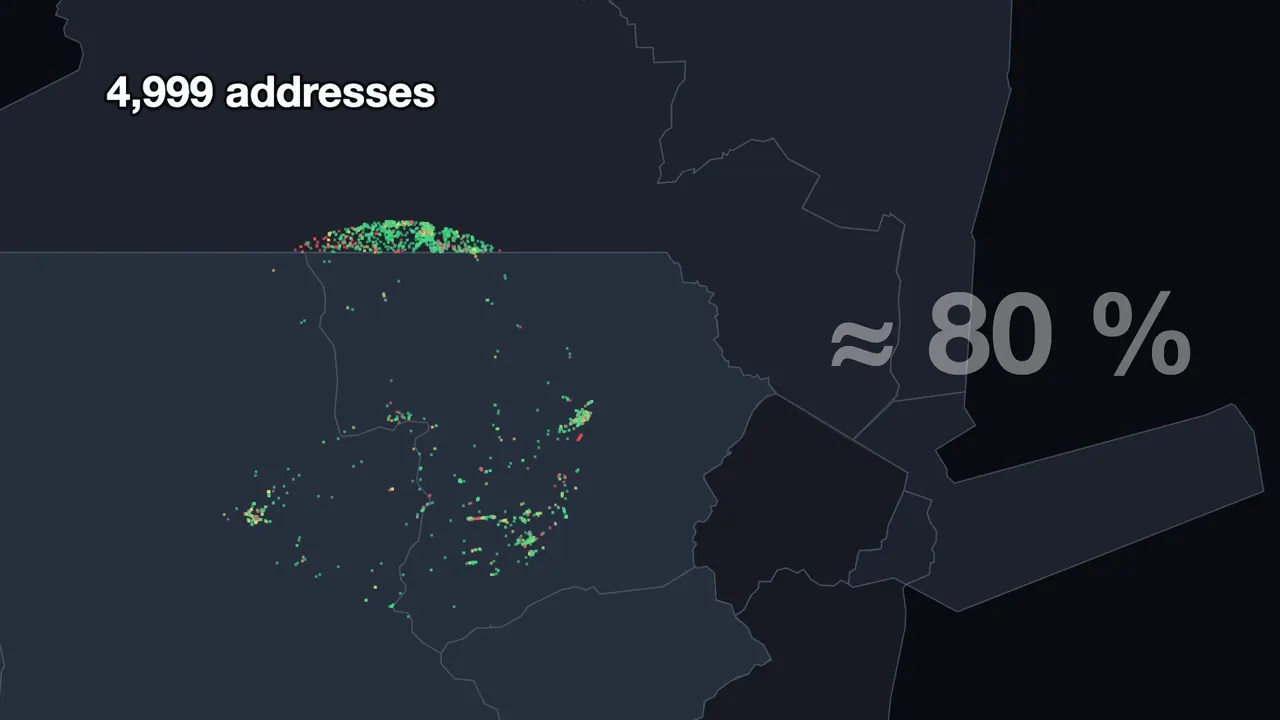
For years every release fixed some search bugs, and every year 50 to 90 new ones came in. Users told us almost nothing works; we could not reproduce a single bug ourselves. So in 2025 we stopped guessing and built a test bench: take thousands of real addresses from the map, type each one the way a person would, and count how many are found.
The first honest number was about 80%. Every user report with a real address became another test — and the bench, not our feeling, started deciding what is fixed.
The Old Way: a Librarian
The old search worked like a librarian: find the town, walk along its shelf of streets, open the street, find the house. It works well in a small town. It works much worse when the town is London — one shelf with 56,266 streets — or when there is no town at all and a single word can be a village, a street, or a hospital. Try it:
Every address that broke got its own patch: townships, word order, abbreviations. Each patch fixed one address and broke another, and together they became slow and fragile. One user with eighty maps installed waited more than two minutes for the right result.
The New Idea: Put the Words on the Map
We are searching a map, after all. So instead of walking shelves, the new engine lights up every word of the query on the map, and looks for the places where the lights meet. A street and its town meet because their areas overlap; a McDonald's and a gas station meet because they stand next to each other. Since June 2026 every street and every town in OsmAnd maps carries its own area for exactly this.
Here are the real objects the engine finds in Portugal for one long query. Pick the words and watch the map:
The Zipper
Comparing every object of one word with every object of another would take hundreds of millions of checks — more than half a minute for a single search. The trick is the same one every web map uses: tiles. The world is cut into four squares, each of them into four again, and so on, and every tile gets a number along a Z-shaped curve. Two tiles never overlap partially — they are either apart or one sits inside the other.
So each word becomes a sorted list of tile numbers, and two words are joined by walking both lists at once, like a zipper. Pairs that can't meet are never looked at:
An advanced version of the zipper jumps between tile levels — a town is a big tile, a street a small one — and skips whole regions where the other word has nothing. Half a minute became 50 milliseconds.
Tetris With Words
Long queries, like a crossing of two streets, add one more twist. Each object covers only some of the words, so the answer is a set of pieces that covers every word exactly once — and also meets on the map. It is a classic hard problem, the same family as Sudoku. The engine plays it like Tetris: pieces dock into a row, every docking is checked on the map, and a row that drops to zero disappears together with everything that could have been built on it.
This is the engine's real trace for Travessa de Santo António, Rua Joaquim Ribeiro de Carvalho, Portugal:
Where We Are Now
The new engine went from its first test run in July 2026 to beating the old search two days later, and kept climbing. Today 99.5% of the 137,000 test searches are found. In Pennsylvania, where we started, the addresses we could not find went from 206 to 40 to 7 — and those last seven are broken in OpenStreetMap itself.
It also handles queries the old search never could, like a McDonald's next to a gas station.

Not everything is solved. Havana's Calle L, between 23 and 25 has no house number, only the two streets around it, and we still can't find it. Ranking, typos, and common words each deserve a story of their own.
Try It and Help
The new search comes with OsmAnd 5.5. You can try it today in our nightly builds, and as always the code is on GitHub. How to use search is described in the Search documentation.
- Tell us what you typed. When search can't find something, send us the exact query to support@osmand.net or open an issue on GitHub — every miss becomes a test.
- Help the map. A street without a name can't be found, and streets inside a town without a boundary may be missed. Add names and draw boundaries in OpenStreetMap.
The video has subtitles in 7 languages and dubbed audio in German, French, Italian, and Spanish.
We appreciate your interest in us and thank you for taking the time to read this article. Join us on social media to keep up to date with the latest news and share your experiences. Your opinion is important to us.


01:00 PM
Nintendo Loves You: No Plans To Abandon Physical Media Because ‘Fans Enjoy It’ [Techdirt]
I’ve taken a lot of shots at Nintendo over the years, often times under various versions of headlines that start with “Nintendo Hates You“. And those shots were well earned, given the company’s apparent policy of being as anti-fan as it possibly can be on all matters related to intellectual property. Nintendo never misses an opportunity to choose IP protectionism over embracing fan culture and the creativity of its own customers and evangelists.
But once we get away from matters of IP, Nintendo can actually be quite attentive to its fan-base. Everything about the UX for its platforms, consoles, and first-party titles show genuine care for what Nintendo fans want and like. It’s how this company has managed to remain so successful after all of these years. And that apparently extends to the latest console-war battleground, which is physical media. And on physical media, Nintendo appears to put a ton of weight on what a portion of its fans want as it plans to continue the use of physical media into the future.
Vice President and General Manager for Nintendo in Latin America Bill van Zyll spoke on the topic during a recent interview with YouTuber Coelho conducted during the Brazil Game Show. The Nintendo-focused YouTube channel asked about a number of topics related to Nintendo’s activities in the region, including localized Nintendo Directs. That’s when the question of physical games inevitably came up. Van Zyll was keen to emphasize the benefits of the format while assuring the company’s continued plans to produce physical games.
“Historically, we haven’t had a preference for a specific format,” he explains. “We take consumer preferences very much into consideration. We also have a platform that was just launched. We’ve been around for a little over a year with the Nintendo Switch 2, and it offers both digital and physical games. Therefore, we have no plans to abandon physical media. We know how much fans enjoy it.”
As Kotaku notes, consumer demographics are certainly playing a roll here. Nintendo gamers prioritize physical media games more than other console users. But in an industry that is quickly building a reputation for casting aside customer sentiment in favor of doing whatever the Copilot-created spreadsheet tells them they should do, seeing a gaming company actually take its own customers into account in this way is a good thing.
Nintendo’s heavier reliance on physical sales makes any argument for a shift towards digital sales exclusively far weaker, making the choice to continue supporting physical sales an expected response from the company. Still, as Sony continues conversations with a number of companies over their decision, it is at least reassuring for Nintendo fans that the company has no plans to follow Sony’s lead. At least for now.
There is a big enough percentage of the gaming public that likes to buy something physical, for all kinds of reasons. Ownership rights are far more robust that way (for now). Preservationists need physical media to truly do their preservation work. Treating these games and the media packaged with it as collectables is absolutely a thing.
So, those of you who want physical media games? Nintendo loves you is the only appropriate headline. I just wish that posture could infect all the other areas in which Nintendo has long treated its fans poorly.
08:00 AM
SpaceX Whines About Space Collisions After Gutting Regulators That Oversee That Sort Of Thing [Techdirt]
Michael Nicolls, SpaceX’s vice president for Starlink and president of xAI, appeared recently at the International Astronautical Congress in Turkey to lament the rise of space collisions as Musk and Bezos flood the night sky with low-Earth orbit (LEO) satellites. According to Nicolls, there’s been a decided lack of coordination among space companies as they’ve rushed LEO satellites into orbit (sans any meaningful regulatory oversight), resulting in multiple recent near-collisions:
“Once you can track this debris, and if you can track it well, these are like obstacles on a road. If you can measure them, you can predict where they’re going to be, and you can avoid them,” Nicolls said. “What you can’t avoid is other operators who maneuver without telling you where they’re going to go. We have many examples of this on Starlink, unfortunately.”
Both Bezos and Musk have only really begun to launch tens of thousands of expected LEO satellites, so the coordination problems we’re seeing now are just the very beginning.
Starlink satellites perform around 1,000 collision avoidance maneuvers per day to avoid other satellites or space debris. According to Nicolls, Starlink satellites have avoided collisions with around 650 active satellites, without only half of those satellite owners engaging in ephemeris sharing with SpaceX. Some avoid sharing this location and movement data out of fear that it will compromise competitive information.
As a result, there’s been a surge in examples where other company’s satellites got “too close for comfort”:
“Either they were not publishing their ephemeris to us, or they were not considering the ephemeris of others when they were maneuvering, and these led to conjunctions of tens of meters to hundreds of meters,” Nicolls said. “Way too close to [sic] comfort.”
If only there were… say… some sort of government bodies tasked with overseeing the rise in space junk and orbital debris, helping industry coordinate launches and navigation, and penalizing bad actors who repeatedly engage in bad behavior that can’t be deterred through industry collaboration?
U.S. regulators had historically had a hands-off approach to regulating space, though more recent incarnations of the FCC had just begun implementing some actual guidelines — like this 2022 proposal by the Biden FCC that implemented a five year limit for letting your dead satellite stick around in space. That was matched with FCC actions to finalize penalize companies that bungle de-orbits.
You’re to ignore that Elon Musk’s takeover of the U.S. government — and subsequent butchering of numerous regulatory initiatives he wasn’t empathic or smart enough to understand — will directly contribute to all manner of chaos, both terrestrial or otherwise. Musk’s cash helped contribute to gentlemen like Trump FCC boss Brendan Carr, who spends most of his time taking a giant dump on the first amendment or gutting consumer protections and corporate oversight.
Nicolls also laments the lack of cooperation with China, which is increasingly difficult given the overt hostility, protectionism, and xenophobia of a Trump administration heavily propped up by Musk cash.
In addition to space junk, scientific researchers have warned for years that Elon Musk’s Starlink LEO constellations are harming research. The light pollution (Musk claimed would never happen in the first place) is making it far more difficult to study the night sky, a problem researchers say can be mitigated somewhat but never fully eliminated.
The massive repeated launch and de-orbiting of LEO satellites at scale is also introducing a massive amount of burning heavy metals into the atmosphere that scientists say are actively degrading progress made on restoring the ozone layer. Thanks to Musk and his autocrats, regulators are now largely incapable of protecting the public from these growing harms as well.
Despite the apparent belief that government exists exclusively to steal peoples’ money and stifle innovation, these government agencies can and do contribute massively to the public good. Often invisibly, if they’re doing their jobs well. When they aren’t doing their jobs well it’s often because they’re being lobotomized through the kind of mindless deregulation Musk supports.
Then when companies and industries complain that there’s perhaps more anticompetitive shenanigans and market chaos than there should be — they refuse to connect the dots back to their own actions. And they’re helped by a press (notice this Ars Technica piece never even brings up Musk companies’ history of undermining government) that doesn’t have much interest in pressing the issue.
07:00 AM
Is our attitude up to us? [Seth Godin's Blog on marketing, tribes and respect]
If the stakes are high enough and the duration you need to keep it together is short enough, can you control your response?
Because if we can do it then, we can learn to do it now. Acknowledging that it’s a choice is difficult, because choices come with responsibility. “I’m not a patient person,” is not the same as, “Being patient requires a lot of work for me.”
Attitudes are skills. Like all skills, they take practice, preparation and effort.
Here’s a list to get you started:
Empathy
Generosity
Kindness
Patience
Fairness
Gratitude
Forgiveness
Trust
Honesty
Humility
Self-awareness
Integrity
Accountability
Self-discipline
Equanimity
Self-compassion
Bravery
Persistence
Resilience
Consistency
Optimism
Adaptability
Acceptance
Grit
Curiosity
Open-mindedness
Discernment
Focus
Thoroughness
Initiative
Craftsmanship
Generosity of spirit
Service
Stewardship
Wonder
Responsibility
Dignity
Commitment
Presence
If we can learn them, even a little, they’re skills. Great news.
HT to Zig.


A Comprehensive Proposal For Court Reform, V. 1.0 [Techdirt]
For American democracy to survive, we are going to have to do something about the current operation of our judicial system. But what is needed to fix it is more than just “packing” the Supreme Court, as many have proposed, because the problems we’re facing extend far beyond just its current personnel line-up. There are other things that could and should be done to the court system, and first. After all, expanding the Supreme Court is hardly an expedient change. Getting the desired result—more seats, filled by more preferable jurists—would require control of the White House to first change. But many of the other things we could do would likely only need a Congress committed to achieving them. We should start there, so that we can start making meaningful improvements without delay.
Furthermore, lasting, effective reform requires strategic thinking about how the entire federal court system functions, at every level and not just the Supreme Court. It requires that all of its interdependent parts be overhauled in a sensible, sustainable way that respects, and, when necessary, restores, American legal traditions. No change should be so radical that we throw out the baby with the bathwater, as there are plenty of good things about its previous and even current function worth saving—in fact, one of the biggest issues we’re facing with the courts right now is how many of those traditions (ex: respect for precedent) are suddenly being ignored, in which case the “radical reform” is simply to reverse that trend.
It is also important that the result of any reform effort minimizes the judicial branch being a political prize for future elected officials to fight over. That it has already become one is itself a big reason why reform is now warranted. We need a judicial system that can withstand political winds and gain legitimacy from doing so. It will take some political power to remediate what our judicial system has deteriorated into in order to restore its apolitical constitutional function, but such should be a goal of the exercise.
What follows, then, is a preliminary list of steps for Congress to take to achieve this comprehensive reform. Some will of course directly zero in on the Supreme Court, including changing how it is constituted, but such a change alone won’t be enough, not even to address all the problems with the current Court. First and perhaps foremost Congress needs to take stock of the procedural rules all courts follow to ensure that litigation can from here on out unfold more predictably, especially when brought to check the power of another branch of government, which has become particularly difficult as of late.
Then there are other steps for Congress to take that focus on the administration of justice, writ large, to make this reform project sustainable, such as by realigning the appellate circuits and relocating any current Article I administrative law “judges” we might still need so that they are under the supervision of the judiciary instead of the executive. We also need to revisit how the judicial branch is managed, including by (a) restoring some sense to the process that appoints jurists to the courts in the first place, (b) ensuring that judges at every level are subject to adequate professional regulation, and (c) enabling judges’ removal, when necessary, with well-calibrated mechanisms that are neither overly aggressive nor as impotent as they have lately become. Meanwhile Congress will also need to statutorily clean up the mess the Supreme Court has made with its recent decisions, to the extent it is possible for legislation to do so.
Even more reforms than just those listed here may also prove to be necessary, but the key is that if we are going to achieve balanced and lasting change we cannot do any less than what is described here. Still, what follows also includes notes of caution for how each potential reform measure should be approached in order not to create new problems in the process of trying to address the current ones each reform is intended to address.
GENERAL APPROACH TO REFORM
Ground rules. In theory the sky is the limit, but, thinking pragmatically, particularly with respect to the need to begin this reform as soon as practically possible, it is helpful to limit the possible changes in a few ways.
No constitutional amendments. Effective court reform should not require any constitutional amendments, which take long periods of time to pass and are thus not easily modified if it turns out that one leads to undesirable consequences. They also are generally unnecessary, as there is plenty we can still do by statute. Congress has lots of power over the federal courts and has historically done plenty to regulate them. Any immediate reform should therefore continue in that vein.
No significant constitutional reinterpretations. Reforms also should not call for substantially different readings of the Constitution than we have generally accepted in the decades and centuries before now. Life tenure, for instance, is something that has long been read into the Constitution, even though it doesn’t literally call for it in so many words, which means that perhaps we could choose at some point to interpret the constitutional language we’ve premised our understanding of it on differently. But we’ve read it this way all this time for important reasons that still are applicable and so should continue to.
Also, if we change too much about our judicial system too suddenly with this reform, then we risk unstable results. Some of these long-standing interpretations, going back even to Marbury v. Madison, which itself created the modern role of the Supreme Court we’ve accepted ever since, despite it not being literally spelled out in the Constitution this way, remain useful pillars to retain and work around, at least for now. There is still plenty we can improve with them remaining in place.
No political exclusivity. Perhaps most importantly, court reform cannot be the project of the political left, or right, or any particular constituency. While as a practical matter this project will only happen when Democrats have the political power able to implement it, it is critically important not to rebuild the American judicial system in a way designed to award them their preferred political prizes. At minimum such a system would be weak and lack legitimacy to anyone not subscribing to such preferences, and preserving the legitimacy of the courts is of tantamount importance—indeed, restoring the legitimacy of the courts is the animating objective behind the entire court reform project. Reform will therefore generally require being focused on sustainable judicial principles and not specific judicial outcomes.
It will also necessarily require people from across the political spectrum to help build the strong system of justice our democracy requires. Perhaps the project should not include those who have been too eager to tear down our constitutional order, but there are plenty on the right who have sincerely advocated for sustainable legal principles who should be meaningfully included in this endeavor. Without their participation it will be difficult to produce what is needed here: a sustainable system of ordered liberty that can survive any political era and last for generations. With this project we need to create a judicial system the public can always believe truly dispenses justice, and to everyone, no matter who they are and what their politics. It requires that principle, not policy, be the guiding light, and it’s only with the contributions of all those who are so focused, regardless of their political stripes, that any resulting reform will be durable.
Common themes. For each specific proposal, a few themes are likely to emerge.
Personnel addition. One relates simply to the expansion of the number of judges we have on the bench. The unfortunate reality is that not every judge and justice currently serving in the court system is quite capable of or interested in protecting liberty and justice for all, or the constitutional system designed to deliver it. And at the moment those who lack those qualities have an outsized influence on the function of our democracy and the liberty it promises. It is therefore of basic mathematical importance to get more people on the bench who do have them.
But to suddenly “pack” the courts with jurists prone to ruling in certain ways could turn the co-equal Article III branch of government into a political prize subordinated to politics in a way we have long tried to insulate it from in order to make sure jurisprudence, and justice, are not subject to political fortune. The solution to our current problems cannot be so craven as to simply stuff the courts full of more judges whom we would currently prefer, because it would mean that subsequent generations of politicians could keep packing it with those that they preferred instead.
Still, the current situation may nevertheless provide opportunities for expanding the number of judges in ways that are anchored in their own legitimate justifications for why at this particular moment in time it is an appropriate occasion to expand the number of jurists, yet in the future such an occasion is unlikely to repeat. In other words, one running theme throughout these specific proposals is how, while pursuing some other goal with each reform, we might also create the opportunity for such new additions, but in a way applicable only now and not in the future.
Tempered statutory authority. The courts are a co-equal branch of government with Congress. Nevertheless, Congress has a lot of control over their function: for instance, it helps assure they are funded, and it provides statutes relating to their operation, not just with respect to how they run as their own interests but in terms of how they handle the litigation brought before them. These reform proposals therefore relate to Congress asserting its control over the courts in order to ensure that there is greater predictability in the jurisprudence they produce than we are currently experiencing now.
But care should be taken to not be too heavy-handed and inadvertently subordinate the courts to Congress. We would not want to, both as a general constitutional matter and also for practical reasons. Indeed, while some statutory solutions can offer precision and predictability where we currently lack them, the fuzziness of leaving certain questions to the courts—both substantive and procedural—affords the flexibility that justice may require, which we would not want to eliminate. Congress cannot anticipate everything, and our common law-rooted courts need the free hand to not only self-regulate, thereby preserving their constitutional independence, but to also be able to develop the judicial solutions justice requires, particularly in accordance with long-standing judicial tradition. The problems we are experiencing today relate more to the fact that some courts have strayed from that common law tradition, and thus there is the need to statutorily reconnect them to those existing principles and precedent, and not to further remove them.
SPECIFIC REFORM PROPOSALS
Reform #1: Statutorily address procedural rules. The most expedient, and arguably most necessary, thing for Congress to do is address the ways the courts operate. With care, of course, because in many ways the courts are self-governing, both in terms of their internal operation and the way they oversee litigation, and successfully, such as with the federal rules they adopt to govern civil, criminal, and appellate procedure, as well as the rules of evidence, and it is important to preserve their independence. (Courts nevertheless should also take the occasion to review their own rules and themselves assess whether modifications are needed, particularly in light of the many stresses that Trump Administration litigation has exposed.)
But there are several ways that Congress could and should step in. To begin with, Congress could ensure that we have, and fund, such things as cameras in the courtrooms and online case archives so that judicial documents truly become the public records they are supposed to be and the judicial system overall becomes more transparent. In recent years transparency has improved, including with Supreme Court oral arguments now being contemporaneously broadcast and more appellate hearings being streamed online, but there is more that could and should be done on this front, and PACER remains an expensive, inefficient blight on the justice system. It may also be appropriate for Congress to ensure that there is more consistency in the rules of practice across the court system, particularly when local rules create too many bespoke exceptions without adequate justification.
There are also more major changes that Congress should make. One way is by addressing the ability for the courts to act. It has always spoken legislatively on questions of court jurisdiction, and there remains the need to say more. As an example, many of the jurisprudential issues we are currently suffering from have stemmed from parties “forum shopping” and trying to get cases before courts expected to be unduly favorable, and Congress can and should shut down the ability to gain such advantage. It has also become much more difficult to bring certain challenges against unlawful government behavior. Where the courts (including, especially, the Supreme Court) have effectively shut the door to it, Congress can and should pry it open again, such as by using statute to ensure that government mischief can be effectively challenged because enough will have the standing to do it, and that it can be effectively restrained before it has had the chance to cause injury.
Another major way for Congress to make changes is with respect to the operation of the Supreme Court, which is not handling self-regulation well as of late. It has rules, but only some of them are articulated, and some, such as those governing its shadow docket, have proven to be shockingly arbitrary. The problem is in some ways tricky to address, because we cannot subordinate the Court to another branch of government, nor should we want to. Nevertheless there needs to be rules, transparent to everyone, and applicable to everyone, including the Supreme Court itself. Congress can and must ensure such rules exist, even if the Court still has a hand in writing them. Somebody needs to so that its jurisdiction can be understood, predictable, and regarded as legitimate when exercised, which it has lately not been.
Meanwhile, careful study of other procedural rules may reveal more ways Congress could improve the operation of the courts, especially to ensure that unlawful government action can be challenged in a way that produces usable remedies, whether injunctive, compensatory, or deterring. “Qualified immunity,” for instance, is a judge-made procedural doctrine at odds with the Constitution that has increasingly prevented such remedies, which Congress can statutorily negate. Naturally any proposed changes Congress makes need to be carefully calibrated to make sure they are actual improvements, but even simply addressing known areas of current dysfunction will do a lot to restore the courts to being the protectors of justice we need them to be.
Reform #2: No More Article I Judges. History has born out the wisdom of making the courts a co-equal branch of government, along with Congress and the Executive. When disputes arise, especially involving the other branches, it is important that the adjudicator be independent, and the American constitutional structure helps ensure that judicial independence because none of the other branches are the judiciary’s boss.
But there are certain types of adjudication that we have allowed to happen where there is no such independence. For example, in the case of immigration law, immigration “judges” end up having enormous power over the rights of individuals, yet without any of the structural safeguards of an independent judiciary. Despite the stakes, with people’s lives and property hanging in the balance, the due process the Constitution requires is routinely denied to many. And the problem has only gotten worse so long as the people judging their fates are increasingly beholden to the government branch employing them, namely the Executive, and its embedded xenophobia. Given the hijinks of the Trump Administration, firing any immigration “judge” attempting to maintain any pretense of independence, no matter how statutorily required, this constitutional mis-structuring of an important adjudicative body can no longer be tolerated. To the extent that we need specialized adjudication, like for immigration matters, the administrative law judges we employ to do that adjudication need to be answerable to the judiciary and not to any other branch. What we are asking them to do, apply law to facts, is what Article III judges are for.
Such a constitutional relocation would not necessarily mean, however, that immigration judges would have to be appointed to lifetime positions. The likely better analog is magistrate judges, who are not themselves Article III judges but work alongside them. These jurists handle a lot of court work, as appointed Article III judges do, but it is work subject to the supervision of those appointed Article III district court judges. From a practical standpoint they are fully empowered to handle many docket matters, but from a constitutional standpoint there is oversight by people who have been vetted by Congress and employed by the independent judiciary.
Obviously rolling any population of administrative law judge, such as immigration judges, into the judiciary will require its expansion, because all those judges will need to be supervised by district court judges and eventually appellate ones. But given the need to reinvigorate the judiciary with more jurists more principled than so many we currently have, such an expansion also provides an opportunity to put more on the bench, and for a reason that is unlikely to recur in the future on any similar scale. (In addition, Congress could also streamline immigration law to make it more reasonable and equitable, which would also perhaps lessen the need for so many immigration judges in the first place.)
Reform #3: Better manage the appointment, regulation, and removal of jurists. Putting administrative law judges under the supervision of the Article III judiciary, and, indeed, protecting the independence and authority of the Article III judiciary, requires making sure that the judiciary is populated with individuals capable of wielding the immense power we are entrusting them with. It cannot be riddled with self-serving, injudicious, intemperate, incapable and/or corrupt people and still fulfill its critical constitutional role.
Some of the infirmities currently plaguing the bench stem from Congressional dysfunction, which has rendered the appointment process a political spoil for the majority party to unilaterally seize to benefit its own political ends. While solving Congress may be beyond this particular judicial reform project, as part of a reform effort Congress could still potentially document in its rules better instructions governing how nominees should be evaluated and approved. It also could restore some sort of filibuster mechanism to help prevent giving lifetime appointments to particularly undeserving candidates—perhaps one not nearly so effortless and obstructive to employ as there has been in recent years, but one that nevertheless can provide some sort of emergency brake to prevent giving lifetime appointments to especially questionable appointees.
Once on the bench jurists also need to be subject to a certain degree of regulation in order to ensure that their jurisprudence can be trusted. Self-policing may generally be the best mechanism in order to preserve judicial independence, but any reform project should ensure that whatever mechanism the judiciary uses is sufficiently effective and also transparent, which may not always be the case.
The rules for the requisite “good behavior” required by the Constitution also need to be applicable to any Article III jurist, including those sitting on the Supreme Court, whose self-policing efforts have been particularly insufficient as of late. Financial and political conflicts need to be treated with a seriousness that has often been lacking and require, at minimum, mandatory disqualification from adjudicating certain matters, if not from the bench entirely, depending on their nature.
There also should be specific rules to ensure that jurists are not unduly profiting from their position. As it is, their positions already grant them an unusual amount of power and influence; their status should not also be providing them with any more significant enrichment than their salary already does during active service, although it may be fair to raise salary levels above where they are now in exchange for constraining judges’ ability to otherwise profit from their privileged position. A program allowing for leaves of absence or sabbaticals could also be considered; Court expansion could help open the door to such a program, because expansion might create a pool of justices that are rotated through to man smaller panels that actually sit to hear cases during a term. Ultimately we do want the best and the brightest on the bench, which means the job cannot come at too much of a cost to the individual serving in it. At the same time, however, with these jobs come inordinate power, and so the dignity and neutrality of these positions need to be preserved by all who serve in them.
Meanwhile, as for the incorrigible jurist, there needs to be a greater willingness, and perhaps even statutory obligation, for Congress to remove them. It should be a well-calibrated reflex to do so, one that is not so easy to employ that it obviates the independence we insulate each jurist’s jurisprudence with through life tenure. The political unpopularity of some or even all of a judge’s decisions should generally not be enough to warrant impeachment. But at the same time there has grown to be an almost obstinate refusal to ever employ the constitutionally-rooted, if not also constitutionally-required, impeachment remedy when certain jurists struggle to consistently deliver jurisprudence that can withstand its own independent scrutiny or otherwise engage in behavior that creates significant doubt as to their neutrality or competence. That Congressional inhibition is of particular concern now, given the rash of unqualified judges recently appointed.
Still, not every Trump-appointed jurist is necessarily removable; indeed, some conservative judges have well-proven their politically-independent capabilities, even if some of their decisions are unpopular, and there may even some liberal ones whose service is worthy of further scrutiny as well. We also need a mechanism to address judicial incapacity, so that justice is not held hostage to a life appointment unable to be trusted to dispense it, but at the same time these affected jurists are still human beings, including those whose incapacity may only be temporary, and we need to make sure their personal tragedy does not become a political cudgel that can be used to reshape the bench.
Reform #4: Realign the appellate circuits. Before addressing Supreme Court reform, it is important to first address realigning the appellate circuits, for a few reasons. One is that the Supreme Court is not responsible for all of the poor jurisprudence recently produced; some of it was produced by the Courts of Appeals, so there is as much reason—if not more—to expand the number of fillable seats on those courts as the Supreme Court, especially because they have jurisdiction to hear nearly all cases at some point but the Supreme Court weighs in only on a small subset.
Another reason is that realigning which appellate court gets to hear which cases has been long overdue simply as a matter of population growth and other logistical strains on the current circuit divisions. And then a bonus reason is that this realignment can ultimately provide a justifying anchor for any changes in the composition of the Supreme Court to tie into—although even without this added benefit circuit realignment should happen anyway.
There are currently thirteen “circuits,” or separate Courts of Appeals. Twelve are geographic, and then there is the specialized Federal Circuit that primarily handles patent-related matters, along with a few other esoteric subjects. The first way that realignment should happen is geographically, namely by splitting up the Ninth Circuit. Completely redrawing circuit boundaries would probably be ill-advised, as it would destabilize too much precedent, but splitting a circuit is not unprecedented: it’s where the Eleventh Circuit came from, so we know how to handle it. And from time to time people have proposed it for the Ninth—although usually for ideological reasons to lessen its influence, and sometimes in very strange ways geographically (splitting a state, as some have suggested with California, would wreck the stability of any state law that gets swept up into federal litigation and thus should not be allowed to happen in any circuit realignment), although those calls have generally quieted as of late.
At this point, however, the Ninth Circuit should be split just for practical reasons, largely because it is disproportionately huge, covering the entire West Coast of the United States plus Alaska, the Pacific Islands (including Hawaii and Guam), and the interior states of Idaho, Montana, and Arizona. And there is really only one way to do it geographically: California, Nevada, and Arizona in one circuit, and the states to the north in the other. (As for the islands, in terms of population it would make sense for them to join the northern states—that circuit will be a lot smaller, although still commensurate with the First Circuit’s population—but court access is an important consideration and it may be more feasible for litigants to get to California than Seattle, in which case they should be included with the former.)
Such a split would leave thirteen geographic circuits, for a total of fourteen. But there is one other step that should be taken in the realignment project: dissolving the Federal Circuit, which should happen for several reasons. The most important one is that we have by now learned that having an appellate court with specialized jurisdiction does not really make sense. It isn’t needed: patents are not so special, which we know because we let regular district courts litigate them first anyway and the same Supreme Court adjudicates them later. Plus, with regard to its other specialized subject matter, the D.C. Circuit has already shown itself capable of adjudicating any other creature of administrative law.
Furthermore, the Federal Circuit’s specialization tends to make its precedent unusually insular in how it develops, and its exclusive jurisdiction promotes forum shopping thanks to bootstrapped claims that would ordinarily be heard in other circuits. In sum, the Federal Circuit is an experiment that has proven itself unnecessary if not actually harmful, but dissolving it now also helps with some of the other logistics of larger judicial reform. For one thing it will keep the circuits at thirteen, even with the Ninth Circuit split, which will be a helpful target for Supreme Court seat expansion to be tied to. For another, there is also a need to expand the seats on the remaining geographic circuits—especially that of the Fifth and Eighth, which continually raise internal governance and quality issues with their jurisprudence.
Congress could of course simply expand the number of judges on each court, but it would likely be politically more justifiable to do if there were some other rationale associated with the increase in the number of appellate seats available to be filled. Some expansion can of course be justified just by population growth and caseloads; some could also be justified by the increased supervisory workload resulting from rolling Article I judges into Article III. If the Ninth splits there may also need to be some seats added for each half. But one easy way to get more judges on other circuits is from redistributing the ones currently serving on the now-dissolved Federal Circuit. Such transfers should be constitutional, as it wouldn’t displace life tenure; after all, the judges would still have Article III jobs, and at the same judicial level. Congress should also always have the right to dissolve any court it had the power to create, and reallocating the judges means there won’t be an issue with extinguishing a lifetime appointment early.
Reform #5: Reconstitute SCOTUS. America cannot continue as a constitutional democracy without significant changes to the current composition of the Supreme Court. It is currently controlled by a block of six jurists of, at best, dubious analytical skill, if not more dogmatic motivations. Even if they don’t all intend to reshape our constitutional order—and at least some have made it clear that they do—their gormless naïveté as to the effects of their jurisprudence, as well as lack of respect for precedent and an actual record, have invited injurious contortion after injurious contortion to the American rule of law. At minimum the personnel math needs to be changed in order to wrest control from that block. Which could, potentially, be subtractive, as several justices have behaved in a way that could warrant impeachment. But impeachment is politically more difficult to attain given the supermajority needed to effectuate it than a more additive strategy of just adding seats, which only takes a majority.
The question then is what to expand the Court to. Some have proposed expanding it to a very large, rotating pool of judges, who could be sat per term or per case, but although such a proposal has merit—it would, for example, mute the power any one individual judge could wield, and make the appointment less of a political prize for the President to win—it might require amending, or at least significantly reinterpreting the Constitution, which is a more fraught process and best avoided unless absolutely necessary. The same problem holds for proposals recommending, for example,eighteen year terms, which would also have the advantage of ensuring that every president would be able to appoint some as they came up, which would hopefully somehow dull the inclination to install particularly dogmatic jurists. The problem, however, is that proposals like these are so different from the status quo that it might not be possible to expediently or constitutionally implement them.
But one way to work around the block of six is to make sure that there are four more justices capable of overruling them, which would bring the composition of the Court up to thirteen. Thirteen also has its own, independent justification, because that’s how many appellate circuits there are (and ideally would be), and, already each circuit is effectively supervised by a sitting justice, and such circuits are not currently equitably allocated. Making the number of circuits and justices match is a reasonable policy to pursue on its own merits, even if there were not a more exigent reason also prompting the expansion. But because there is this independent reason to have thirteen justices, it would presumably deter later political attempts to keep trying to pack the Court with even more justices, when there would not be a similar justification.
Reform #6: Rehabilitate Precedent. Reforming the Supreme Court is one thing; cleaning up the mess it’s made is another.
It won’t all be possible. For instance, the people on death row it allowed to die are already dead (at least most of them). For so much the Court has done, no matter how insupportably, there is simply no undo button.
Nevertheless, we can address the staying power of its recent decisions and wipe much of it away. While we generally can’t undo a particular decision—it has already had its immediate practical effect, and there are some constitutional issues with Congress attempting to trump a particular determination—we could still statutorily limit a decision to its facts and rob it of any precedential value, thus causing any court encountering any similar legal question to have to consider it afresh, instead of being bound by the earlier decision that ordinarily would effectively operate as the law of the land.
That operation has generally presumed that the decision itself followed prior precedent, reflected the actual record, and complied with the Court’s own procedural rules. Yet in so many instances, the Court has produced decisions that have deviated from all such practices. It is bad enough that such decisions were able to have immediate effect, but they certainly should not be able to reverberate into the future as statements of law. And given that Congress is the legislative branch and entitled to write the law of the land, it should have the power to ensure these decisions of doubtful legitimacy do not.
It wouldn’t be unprecedented to treat decisions this way; it would be similar to what some courts themselves do to certain decisions by “unpublishing” them and thus rendering them unsuitable to be relied upon in future matters. The only difference is that it would be Congress rendering them unusable and not the Court itself. Still, while doing so should be within its legislative purview it’s a legislative power that should be used modestly. For one thing, displacing precedent strains the rule of law, even if it is bad precedent. Indeed, one of the problems the Supreme Court has presented us with is a lack of respect for precedent, which has left the public unsure about what the law actually is since it cannot count on any particular precedent to still be controlling. We would want to be careful not to exacerbate the same problem we are trying to fix in the course of trying to fix it, but the exercise itself is essentially one designed not to replace precedent but to restore the precedent that the Court displaced, yet without the analytical care ordinarily needed to do so.
Furthermore, not everything the Court has recently done is necessarily bad. We therefore wouldn’t want Congress to automatically nullify everything the Court has recently done. Instead only a selection of cases should be subject to such treatment. A committee could be formed, perhaps of lawyers, retired judges, and academics, who could review the Court’s recent decisions—perhaps going back to the Gorsuch appointment, when the conventional operation of the Court was diverted via Senatorial appointment hijinks—to make recommendations for which decisions are most suspect and thus deserving of this legislative dulling.
It is of course a big deal for Congress to supersede a fellow government branch. But it is also a big deal when the Court has superseded Congress. And what is being called for here is not to trump a particular legal conclusion the Court has reached in any particular case but to play its constitutional role in making clear what the law actually is in places where the Court has muddled it.
Pluralistic: Sovereign citizens, but for news (26 Oct 2026) [Pluralistic: Daily links from Cory Doctorow]
->->->->->->->->->->->->->->->->->->->->->->->->->->->->->
Top Sources:
None
-->

Today's links
- Sovereign citizens, but for news: By reading the LA Times, you agree…
- Hey look at this: Delights to delectate.
- Object permanence: Patenting tax dodges; 6-word sf; Newscorp shareholders v Murdoch; Ancient German ophthalmology cult; Trolley problem is stupid; Trump's influence peddling to Chinese millionaire; Al Franken v binding arbitration; Yoga pants spite parade; Dems' secret Congressional committee; RIAA v your PC; "Going Under"; "Machine Man"; Aging goths; "Everfair"; Kremlin will destabilize Ukraine; FCC fronts for Big Cable; Straight Outta Vagina; Remixed TED Talk about remixing; Authoritarian debt.
- Upcoming appearances: Vienna, Kilkenny, Courtenay, Vancouver, Oxford, Sheffield, Virtual, Oxford, Montreal.
- Recent appearances: Where I've been.
- Latest books: You keep readin' em, I'll keep writin' 'em.
- Upcoming books: Like I said, I'll keep writin' 'em.
- Colophon: All the rest.

Sovereign citizens, but for news (permalink)
When it comes to terrible practices by website operators, it takes a lot to shock me. I literally wrote the book on the subject. But last night, I encountered a piece of genuinely appalling fuckery and I can't get it out of my head, because it's such a perfect storm of outrageous conduct and institutional decay.
It happened when I followed a link to an LA Times article. Having lived in LA three times (and having been an Angeleno for a decade and counting this time around) I generally have warm feelings for the Times. The Times's Festival of Books is a great event that I speak at most years, and I'm broadly happy to have a daily newspaper covering my city.
That said, the Times has been chipping away at my goodwill for the past decade. First, there's the personal: after a Festival of Books appearance some years ago, the books editor approached me and asked if I'd contribute regular book reviews to the paper. I said yes, and then immediately my editor got laid off, reportedly so they could avoid giving him benefits that would come with seniority.
I wrote several reviews for a new editor, though the paper never sent me a contract for any of them – or a payment! Many months (and published reviews) later, an editor I'd never had contact with at the paper got in touch to get the paperwork squared away, and the Times sent me a contract with broad, one-sided language that I would never sign onto.
Given that they'd already published my work, there wasn't much they could do to make me sign the contract, so, after quite a lot of wrangling, I eventually got the offensive clauses removed and got paid (but I never got invited to write another review for them).
To be honest, this is par for the course. The last time the New York Times asked me to write for them, they refused to remove some similar clauses from their contract (something they'd done previously), and the contracts person just ghosted me after a couple of volleys.
A similar thing happened with the Washington Post the last time I wrote for them, except they (like the LAT) published the work and then sent me a one-sided, manifestly unfair contract that I refused to sign. Given they'd already published the op-ed there wasn't anything they could do about it, so eventually I got a better contract and a payment (and again, that was the last time the Post asked me to write for them).
Basically, there's an epidemic of bad legal terms sweeping the American media industry, and while the LA Times isn't the worst offender (at least they didn't ask me to assign any related patents, trademarks and copyrights to fictional characters, as Conde Nast does!), they're not what you'd call "writer-friendly" in their contracting terms.
But again, that's hardly unique. If I disqualified news outlets because they tried to shift liability to, and grab rights from, their writers, I'd be left with damned few media outlets.
But on the editorial side, the Times has a bunch of billionaire-shaped red flags. The paper's owner is the Trump-allied, severely AI-pilled biotech billionaire Patrick Soon-Shiong, whose editorial interference in the Times is comparable to Bezos's interference in the Post. Like Bezos, Soon-Shiong killed the paper's endorsement for Kamala Harris:
https://www.nytimes.com/2024/10/26/us/los-angeles-times-endorsement-soon-shiong.html
And I have my suspicions that Soon-Shiong might have been behind the layoff that killed Brian Merchant's beat as the country's first technology critic, from which perch Merchant assayed some acerbic, well-reasoned criticism of tech billionaires and AI:
https://talkingbiznews.com/media-news/ex-la-times-tech-columnist-merchant-joining-ai-now-institute/
Again, that's not disqualifying. If I boycotted every newspaper owned by a reprehensible billionaire, I'd have to turn my back on e.g. the NYT with its morbidly wealthy, union-busting owners:
But unlike the NYT, the LA Times has followed the playbook of Alden Capital papers (like the Chicago Tribune), shipping a skinnier paper with less original reporting at a higher price (which is why I canceled my subscription):
But even that isn't disqualifying. Like the Tribune, the LAT still employs dedicated, talented reporters who do excellent work, which is how I came to be following a link to a recent article yesterday…and how I came to find myself confronted by an enshittificatory gambit that shocked even me.
Here's what got me: when I visited the Times, I got a dickover that blocked all the content on the page until I clicked "Continue," and the text of that dickover is a breathtaking piece of enshittified legal fuckery:
By continuing, you agree to our Terms of Service, which include arbitration and a class action waiver, and our Privacy Policy. You agree that we and our third-party vendors may collect and use your information, including through cookies, pixels and similar technologies, for the purposes set forth in our Privacy Policy such as personalizing your experience and ads.
This is wildly illegal and incredibly immoral. The paper claims that by simply reading an article, you agree that you can never, ever sue them for virtually any reason, and that you have consented to effectively unlimited surveillance and commercial exploitation of your private data.
It's hard to overstate how dangerous this kind of binding arbitration waiver is, but to give one example: Disney makes people who sign up for free trials of Disney Plus "consent" to one of these waivers. When a woman was killed by a Disney World restaurant that lied about the allergens in its food, the company told a judge that her grieving widower couldn't sue them because he'd waived that right by signing up for a trial of D+:
https://lawreview.missouri.edu/infinite-arbitration-how-one-click-can-take-you-out-of-court-forever/
The company later backed off for that one specific case, but subsequently doubled down on binding arbitration. By putting an arbitration clause in its terms, the LAT could head off my right to sue them if they stiffed me on those reviews I wrote for them, Brian Merchant's right to sue them for wrongful termination, and your right to sue them if you get run over by a newspaper delivery van.
Then there's the privacy clause: the LAT is a California paper, and in California, we have the CCPA, a reasonably good privacy law. Under the CCPA, privacy waivers have to be explicit, informed and can be withdrawn at any time. What's more, the CCPA has broad prohibitions against "dark patterns" that this dickover almost certainly violates:
https://cppa.ca.gov/announcements/2024/20240904.html
In theory, there's a way to avoid all of this: you could just use the "Kill Sticky" bookmarklet or an adblock filter to block or dismiss the dickover without ever clicking "continue":
https://pluralistic.net/2026/07/21/dickovers/#block-element
But this is an industrial strength dickover; it uses advanced tricks to block existing dickover killers, likely a combination of shadow DOM and an "important" scroll-lock in the html.
Like I say, this shocks the conscience. Under this standard, the Times's reporters could find themselves bound to legal "agreements" with the companies they investigate online that could interfere with their reporting. Just as bad is how these illegal measures mislead the Times's readership on two of the most important consumer issues facing Californians (and all internet users) today.
As Jargoggles points out, this is the corporate version of the bizarre nonsense that Sovereign Citizens gabble at cops when they get pulled over for driving with a special "sheriff's license plate," and at judges to insist that they lack jurisdiction due to the tassels on the courtroom flag:
https://kolektiva.social/@jargoggles/117503729678727400
A newspaper's job is to inform its readership, not mislead it.
The very idea that everyone who reads a single article on a newspaper's website "consents" to an 8,865-word privacy policy (that would take 53-67 minutes to read according to Firefox's "Reader Mode" estimate) is a bad joke:
https://www.latimes.com/privacy-policy
The joke gets even worse when you add in the 7,103-word Terms of Service (estimated read: 41-50 minutes):
https://www.latimes.com/terms-of-service
So what can you do? Well, you can use this uBlock filter that blocks the dickover without setting the LAT's "consent" cookie to "1":
latimes.com##+js(trusted-set, window.ctUser, { "loggedIn": true, "ready": true, "subStatus": "1" })
https://infosec.exchange/@deFractal/117505049281552873
If you're a Californian, you can file a complaint with the California Privacy Protection Agency:
https://cppa.ca.gov/webapplications/complaint
As Don Marti points out, businesses dealing with Californians are legally required to acknowledge and honor the Global Privacy Control signal from your browser:
https://federate.social/@dmarti/117504985464483210
Here's an ambitious countermove. Buried in that 7,103-word terms of service is this gem: you can opt out of the binding arbitration within 30 days of "agreeing" to it by sending an email to termsofservice@latimes.com with the subject line "MANDATORY ARBITRATION AND CLASS ACTION WAIVER OPT-OUT". Someone could build a browser mod that automatically sends that email to the company whenever you land on an latimes.com page. You could even include my all-purpose email footer:
By reading this email, you agree, on behalf of your employer, to release me from all obligations and waivers arising from any and all NON-NEGOTIATED agreements, licenses, terms-of-service, shrinkwrap, clickwrap, browsewrap, confidentiality, non-disclosure, non-compete and acceptable use policies ("BOGUS AGREEMENTS") that I have entered into with your employer, its partners, licensors, agents and assigns, in perpetuity, without prejudice to my ongoing rights and privileges. You further represent that you have the authority to release me from any BOGUS AGREEMENTS on behalf of your employer.
All of this is fun to contemplate, but it's hardly enough. It should be illegal for a company to knowingly offer unenforceable contracting terms, especially in its non-negotiable, boilerplate contracts. It's already illegal for California companies to put noncompete clauses in their contracts. In other words, noncompetes aren't just unenforceable in California, they're illegal, and we should extend that prohibition (with sanctions for noncompliant firms and their general counsels) to privacy and arbitration:
Because the LAT isn't the only news outlet that's engaged in this kind of illegal, immoral, conscience-shocking, dickover-delivered enshittification. It's also SOP at Bloomberg:
These gambits are infectious, and they're spreading. Time to bend the curve.
Hey look at this (permalink)

- Dial Up Modem Sounds, from 300 bps to 56K https://www.youtube.com/watch?v=xalTFH5ht-k
-
Colonialism or Appropriation? Alphabets, Print, and Latin as New Technologies of Communication among the 16th-century Nahua https://jorgecanizaresesguerra.medium.com/colonialism-or-appropriation-488a3c0bdaee
-
The Lindsey Graham Files https://www.lindseyfiles.com
-
The Planning Starts Now https://slate.com/news-and-politics/2026/10/trump-accountability-legal-acts-impeachment-guide.html?gift_token=3lvYQO-uSRKXTV0qluiZyg
-
Interoperability vs. Security: Why not both? https://www.eff.org/deeplinks/2026/10/interoperability-vs-security-why-not-both

Object permanence (permalink)
#25yrsago RIAA denies asking for criminal immunity for hacking your computer https://memex.craphound.com/2001/10/26/remember-when-the-riaa-tried/
#20yrsago Big Mac pumpkin https://web.archive.org/web/20061031170037/http://bitsandpieces1.blogspot.com/2006/10/big-mac-pumpkin.html
#20yrsago Going Under: moving kids’ novel https://memex.craphound.com/2006/10/26/going-under-moving-kids-novel/
#20yrsago Accountants patent tax-dodges https://web.archive.org/web/20061029080957/http://www.iht.com/articles/2006/10/19/business/norris20.php
#20yrsago 6-word sf stories https://web.archive.org/web/20061109183215/https://www.wired.com/wired/archive/14.11/sixwords.html
#15yrsago Using machine translation techniques to attack ciphers reveals secrets of ancient German ophthalmology cult https://web.archive.org/web/20111025035607/http://www.isi.edu/natural-language/people/copiale-11.pdf
#15yrsago The Homeland Directive: taut technothriller for the paranoid era https://memex.craphound.com/2011/10/25/the-homeland-directive-taut-technothriller-for-the-paranoid-era/
#15yrsago NewsCorp shareholders revolt against Murdoch family https://www.theguardian.com/media/2013/may/08/rupert-murdoch-news-corporation
#15yrsago One-percenter: why I support Occupy https://www.dailykos.com/stories/2011/10/21/1028500/community/A-Voice-From-the-1/
#15yrsago Debunking the OccupyLondon “empty tents” story https://www.theguardian.com/uk/2011/oct/25/occupy-london-part-time-protest
#15yrsago Machine Man: a discomfiting novel about the antihuman side of transhumanism https://memex.craphound.com/2011/10/26/machine-man-a-discomfiting-novel-about-the-antihuman-side-of-transhumanism/
#15yrsago Goths age gracefully https://www.theguardian.com/education/2011/oct/24/goth-culture-research
#10yrsago Everfair: a diverse, ambitious steampunk novel of Fabian socialists and American Black Zionists in Belgian Congo https://memex.craphound.com/2016/10/26/everfair-a-diverse-ambitious-steampunk-novel-of-fabian-socialists-and-american-black-zionists-in-belgian-congo/
#10yrsago Leaked Kremlin memos reveal plan to destabilize Ukraine https://globalvoices.org/2016/10/25/hackers-publish-kremlin-aides-e-mails-allege-plan-to-destabilize-ukraine/
#10yrsago When the FCC asked about unlocking set-top boxes, the Copyright Office ran to the MPAA https://www.eff.org/deeplinks/2016/10/newly-released-documents-show-hollywood-influenced-copyright-offices-comments-set
#10yrsago Pussy Riot’s “Straight Outta Vagina”: sacrelicious Russian feminist pop anthem https://www.youtube.com/watch?v=Bp-KeVBNz0A
#10yrsago TED talk about remixes and appropriating made by remixing and appropriating TED talks about remixing and appropriating https://www.youtube.com/watch?v=qLlbzI5HURM
#10yrsago Warner Bros angry that someone other than the MPAA is running an illegal internal movie server https://torrentfreak.com/warner-bros-claims-agency-ran-its-own-pirate-movie-site-161025/
#10yrsago AT&T developed a “product” for spying on all its customers and made millions selling it to warrantless cops https://web.archive.org/web/20170504105645/https://www.thedailybeast.com/articles/2016/10/25/at-t-is-spying-on-americans-for-profit
#10yrsago Lawsuit: mayor’s social media blocklists are public records https://www.techdirt.com/2016/10/24/pinac-director-sues-miami-beach-mayor-over-refusal-to-release-social-media-blocklists/
#10yrsago EFF asks court to let American sue Ethiopia for hacking his computer and rounding up his friends https://www.eff.org/press/releases/american-illegally-wiretapped-home-ethiopian-government-deserves-his-day-court-eff
#10yrsago Donald Trump’s super PAC promised a Chinese millionaire access, influence in exchange for a secret $2 million donation https://web.archive.org/web/20161024192242/https://www.telegraph.co.uk/news/2016/10/24/exclusive-investigation-donald-trump-faces-foreign-donor-fundrai/
#10yrsago Al Franken and FCC commissioner Clyburn want limits on forced arbitration https://time.com/4541176/al-franken-arbitration-clauses/?iid=sr-link1
#10yrsago Mercedes’ weird “Trolley Problem” announcement continues stupid debate about self-driving cars https://memex.craphound.com/2016/10/25/mercedes-weird-trolley-problem-announcement-continues-dumb-debate-about-self-driving-cars/
#10yrsago When Californians vote on legal weed, they’ll also vote on wiping millions of arrest records https://web.archive.org/web/20161027161505/https://motherboard.vice.com/read/california-to-vote-on-wiping-old-weed-arrests
#10yrsago Dickhead’s anti-yoga-pants letter to the editor sparks yoga-pants-parade https://www.bbc.com/news/world-us-canada-37751422
#10yrsago RIP science fiction great Sheri Tepper https://locusmag.com/2016/10/sheri-s-tepper-1929-2016/
#5yrsago The Dems' most secret Congressional committee https://pluralistic.net/2021/10/25/people-do-stuff/#personnel-are-policy
#5yrsago Maxing out our global credit-card with authoritarian debt https://pluralistic.net/2021/10/26/inequality-and-guard-labor/#just-watch-me
Upcoming appearances (permalink)

- Vienna: TED AI, Oct 28-30
https://tedai-vienna.ted.com/ -
Kilkenny (Kilkenomics), Nov 6-8
https://kilkenomics.com/ -
Courtenay: Enshittification (Sid Williams Theatre Society), Nov 10
https://www.sidwilliamstheatre.com/events/cory-doctorow-talks-enshittification/ -
Vancouver: BC Policy Solutions Gala, Nov 12
https://bcpolicy.ca/gala/ -
Oxford: Ministry of the Future, Nov 23
https://ministryforthefuture.co.uk/events.html -
Sheffield: Reverse Centaur at Juno Books, Nov 25
https://www.outsavvy.com/event/40274/cory-doctorow-in-conversation -
Virtual: Enshittification, AI, and the Future of Technology (UBC Master of Educational Technology), Nov 28
https://met.ubc.ca/2026/09/met-speaker-series-cory-doctorow-enshittification-ai-and-the-future-of-technology/ -
Oxford: Bennett Oxford Symposium on Open Code in Science, Dec 9
https://www.bennett.ox.ac.uk/events/2026-bennett-institute-symposium/ -
Montreal: World Science Fiction Convention, Sep 2-6
https://montreal2027.ca/en

Recent appearances (permalink)
- Clint Eastwood (No Gods No Mayors)
https://www.patreon.com/NoGodsNoMayors/posts/clint-eastwood-173008088 -
Life After AI (Brain Bar)
https://www.youtube.com/watch?v=IPPa43-n0vI -
Terms of Service with Clare Duffy (CNN)
https://www.cnn.com/audio/podcasts/terms-of-service-with-clare-duffy/episodes/458ce968-af5d-11f0-b539-13ed2afe25f8 -
AI, Work, and Power (Software Engineering Daily)
AI, Work, and Power https://softwareengineeringdaily.com/podcasts/cory-doctorow-on-ai-work-and-power/ -
AI, Corporate Power, and the Fight for Worker Control (Plutopia)
https://plutopia.io/cory-doctorow-ai-corporate-power-and-the-fight-for-worker-control/

Latest books (permalink)
- "The Reverse-Centaur's Guide to AI," a short book about being a better AI critic, Farrar, Straus and Giroux, June 2026
https://us.macmillan.com/books/9780374621568/thereversecentaursguidetolifeafterai/ -
"Canny Valley": A limited edition collection of the collages I create for Pluralistic, self-published, September 2025 https://pluralistic.net/2025/09/04/illustrious/#chairman-bruce
-
"Enshittification: Why Everything Suddenly Got Worse and What to Do About It," Farrar, Straus, Giroux, October 7 2025
https://us.macmillan.com/books/9780374619329/enshittification/ -
"Picks and Shovels": a sequel to "Red Team Blues," about the heroic era of the PC, Tor Books (US), Head of Zeus (UK), February 2025 (https://us.macmillan.com/books/9781250865908/picksandshovels).
-
"The Bezzle": a sequel to "Red Team Blues," about prison-tech and other grifts, Tor Books (US), Head of Zeus (UK), February 2024 (thebezzle.org).
-
"The Lost Cause:" a solarpunk novel of hope in the climate emergency, Tor Books (US), Head of Zeus (UK), November 2023 (http://lost-cause.org).
-
"The Internet Con": A nonfiction book about interoperability and Big Tech (Verso) September 2023 (http://seizethemeansofcomputation.org). Signed copies at Book Soup (https://www.booksoup.com/book/9781804291245).
-
"Red Team Blues": "A grabby, compulsive thriller that will leave you knowing more about how the world works than you did before." Tor Books http://redteamblues.com.
-
"Chokepoint Capitalism: How to Beat Big Tech, Tame Big Content, and Get Artists Paid, with Rebecca Giblin", on how to unrig the markets for creative labor, Beacon Press/Scribe 2022 https://chokepointcapitalism.com

Upcoming books (permalink)
- "The Post-American Internet," a geopolitical sequel of sorts to Enshittification, Farrar, Straus and Giroux, 2027
-
"Unauthorized Bread": a middle-grades graphic novel adapted from my novella about refugees, toasters and DRM, FirstSecond, April 20, 2027
-
"Enshittification, Why Everything Suddenly Got Worse and What to Do About It" (the graphic novel), Firstsecond, 2027
-
"The Memex Method," Farrar, Straus, Giroux, 2027

Colophon (permalink)
Today's top sources:
Currently writing:
- “Once Is Enemy Action,” a science fiction novel about the origins of modern technofascism. Today's words: 547 (29282 total).
-
"The Post-American Internet," a sequel to "Enshittification," about the better world the rest of us get to have now that Trump has torched America. Fourth draft completed. Submitted to editor.
-
A Little Brother short story about DIY insulin PLANNING

This work – excluding any serialized fiction – is licensed under a Creative Commons Attribution 4.0 license. That means you can use it any way you like, including commercially, provided that you attribute it to me, Cory Doctorow, and include a link to pluralistic.net.
https://creativecommons.org/licenses/by/4.0/
Quotations and images are not included in this license; they are included either under a limitation or exception to copyright, or on the basis of a separate license. Please exercise caution.
How to get Pluralistic:
Blog (no ads, tracking, or data-collection):
Newsletter (no ads, tracking, or data-collection):
https://pluralistic.net/plura-list
Mastodon (no ads, tracking, or data-collection):
Bluesky (no ads, possible tracking and data-collection):
https://bsky.app/profile/doctorow.pluralistic.net
Medium (no ads, paywalled):
Tumblr (mass-scale, unrestricted, third-party surveillance and advertising):
https://mostlysignssomeportents.tumblr.com/tagged/pluralistic
"When life gives you SARS, you make sarsaparilla" -Joey "Accordion Guy" DeVilla
READ CAREFULLY: By reading this, you agree, on behalf of your employer, to release me from all obligations and waivers arising from any and all NON-NEGOTIATED agreements, licenses, terms-of-service, shrinkwrap, clickwrap, browsewrap, confidentiality, non-disclosure, non-compete and acceptable use policies ("BOGUS AGREEMENTS") that I have entered into with your employer, its partners, licensors, agents and assigns, in perpetuity, without prejudice to my ongoing rights and privileges. You further represent that you have the authority to release me from any BOGUS AGREEMENTS on behalf of your employer.
ISSN: 3066-764X

The Closer and the Hoser [The Status Kuo]

With just over a week to go until Election Day, Democrats brought out their “closer” this weekend. Former President Barack Obama rallied cheering crowds in Cleveland and Detroit on Saturday and went straight for Donald Trump’s vulnerabilities: high fuel prices, the war in Iran and the lack of seriousness among the people running the country.
Trump, whom Canadians of my generation might rightly call a “hoser” (an uneducated, unsophisticated and goofy person), held rallies of his own. He appeared before crowds in battleground states Georgia and Michigan, answering Obama’s criticisms by, well, confirming them.
A sharper contrast could hardly have been drawn. With much of the country finally focused on the midterms, voters now have a clear picture of what each party stands for heading into the final stretch.
Gold-heavy, gaslight
Obama spent a good stretch of his stump speech on the White House itself. He deftly tied Trump’s renovations to the issue voters care about most while keeping things accessible and funny.
“I don’t know if you’ve noticed, but he is very focused on home renovation. He should be on HGTV. The guy is building a ballroom that is bigger than the White House, paved over the Rose Garden, paved it over, put a helicopter pad on the South Lawn. And then there is just gold everywhere. What’s up with the gold? I mean, he’s got the White House looking like Saddam Hussein opened a Cheesecake Factory… He is clearly not focused on lowering prices for you.”
Obama paired the gilding at 1600 Pennsylvania Avenue with a list of what voters are paying more for, including mortgages, health care, utilities and gas at $4 to $5 a gallon, with diesel above $6.
He acknowledged that presidents sometimes face economic shocks they never planned for, then pointed out that this case was different: “the administration’s actions are directly responsible for rising costs.”
He also accused Trump of enriching himself, his family and his allies. He cited a Venezuelan billionaire, Julio Herrera Velutini, who received a pardon after his family hired Alina Habba, Trump’s former personal lawyer, in a deal worth more than $50 million—something I wrote about in an earlier piece. (Habba denies any role in the pardon.)
Hours later in Perry, Georgia, Trump raised the subject of oil money himself. He bragged that the energy business was booming because of the war: “Our country is making hundreds of billions of dollars because of what’s happened in the Middle East, because they’re coming to Texas and they’re coming to Oklahoma and they’re coming to Louisiana and they’re taking that oil.” His advisers had warned him against raising the point, he said. But Trump being Trump, he raised it anyway:
“I can just see the fake headlines. President Trump is talking about all the money they’re making while people are suffering at the pump. I don’t give a damn. We’re making a frickin’ fortune.”
Democrats should play that on a loop.
In Port Huron, Michigan, the next day, Trump brushed off high gas prices as a temporary cost of the war with Iran. He told the crowd he had no regrets: “Are you kidding? I thought gas would be double and triple.” Gas in Michigan was averaging about $4.83 a gallon by Monday, according to AAA.
Trump also claimed Americans are paying less at the pump than they did under Biden and Obama. Under Obama, the national monthly average peaked at $3.93 a gallon in May 2011. On Monday, it stood at $4.29, up from $3.06 a year earlier.
If Trump thinks the electorate hasn’t noticed, a New York Times/Siena poll conducted Oct. 12-19 found 73 percent of likely voters disapproved of Trump’s handling of gas prices, his worst issue in the survey.
A war nobody needed
Obama described the war in Iran as a choice the Trump regime made. He reminded the Detroit crowd that the war’s stated goal was to force Iran to give up its nuclear program, then pointed to his own record:
“Of course, Iran didn’t have nuclear weapons. We had curbed their nuclear program because I put in place a deal that everybody acknowledged had kept them from getting nukes. I didn’t have to fire a missile. I engaged in diplomacy.”
He underscored that nearly eight months into the war, U.S. allies and bases had come under attack, American service members had been killed and hundreds more wounded. U.S. missile stockpiles were running dangerously low, he said. He added that Iran now holds effective control over the Strait of Hormuz and stands in a stronger strategic position than before the fighting began.
He then turned to Michigan’s Republican ticket. He said Senate nominee Mike Rogers had spent months cheerleading the war and that Rep. John James, the GOP nominee for governor, had voted six times to support it. (These candidates were surely appreciative of the reminder.) Bridge Michigan reviewed both candidates’ public comments and congressional records and found that both had backed the war before they called for a quick end to it.
Rogers is caught in a bind: He needs Trump voters to turn out for him without alienating everyone else. That’s why, on NBC’s “Meet the Press” on Sunday, he spent nearly three minutes dodging a basic question about whether he is a MAGA Republican.
In Perry, Trump described oil price spikes as temporary and tied relief to the war’s end:
“Oil prices are temporarily high and will be falling dramatically as soon as that war is over. There’s so much oil, all in the Strait [of Hormuz]. There are so many ships. We’ll get them out so fast.”
In Port Huron, with Rogers and James sharing the stage, Trump defended the war outright. He called higher gas prices “a small price to pay for taking a nuclear weapon away from maniacs.”
In the October Times/Siena poll, 65 percent of voters disapproved of his handling of the war.
Unserious people
Obama closed his Detroit speech by discussing what the moment calls for. “These are serious times. This is not the time for reality TV. This is not the time for Real Housewives, except on television, but not in our politics,” he told the crowd. He described the people running the Trump regime as caught up in performance and flexing while skipping their homework.
His sharpest example was Defense Secretary Pete Hegseth. In Cleveland, Obama mocked Hegseth’s priorities while the war in Iran drags on:
“He’s very focused on important matters like the jaw lines and testosterone levels of our troops. And live streaming executions. Because that’s how he thinks you cultivate that manly warrior spirit. … How much time do you think this defense secretary spends looking at himself in the mirror in the morning? … These are not serious people.”
As if on cue, the next afternoon, Trump took the stage in Port Huron. Michigan Advance reported that he “meandered” through the address, with Nicki Minaj seated in the audience next to Rogers and James. Partway through the speech, Trump returned to a story he had first told at an Ohio rally about examining the physique of Ohio Sen. Jon Husted, a former college football player. He paused to walk away from the podium and gesture, then resumed the story before breaking off again, exclaiming, “By the way I looked at one hell of a beautiful ass before, Nicki Minaj! That’s hard to miss! Stand up! That’s hard to miss!” He said he hoped she wasn’t insulted, then went back to his story about Husted’s backside.
The world could see who the biggest ass on that stage was.
But he’s a Muslim!!
Every time the Detroit crowd booed, Obama stopped it. “Those of you who’ve been to my rallies, you don’t boo here,” he told them. “They can’t hear you booing. They can hear you vote!” (I’ve updated this line at political fundraisers, saying “Don’t boo, give!” It often gets a laugh—and more money.)
Obama also addressed the attacks on Abdul El-Sayed, Michigan’s Democratic Senate nominee, who is Muslim. He said that Republicans who had backed Trump at every step were now pretending not to know him and were running ads painting Democrats as “radicals, communist, jihadist, woke police.” Then he drew on his own history:
“And they may even use your name or your faith to somehow suggest that you are dangerous and less than trustworthy and less patriotic and less American than they are. We have seen this movie before! I starred in it. I’ve got a longform birth certificate to prove it. This stuff didn’t work on me, not in Michigan. It’s not going to work on Abdul!”
That night in Perry, Trump falsely told the crowd, “You know I saw Barack Hussein Obama was in Michigan and the place was empty.” (More than 4,300 people had attended.) He also referred to El-Sayed as “Mohammed.”
Later in the same speech, he revived his slur about immigrants’ home countries and singled out Somalis:
“I say, ‘Why do we always have to take people from shithouse countries?’ … Why can’t we take people from like, well, Norway? Uhh, Sweden? Uhh, why not Denmark? …
You know, 98% of the people that we have here from Somalia don’t work — they don’t really have to work because they steal so much. They all have a Mercedes-Benz. Can you believe, low IQ and they live better than you do. Maybe they’re not as low as we think.”
Census data tell a different story: About 72 percent of Somali Minnesotans 16 and older are in the labor force, a higher share than Minnesotans overall.
In Port Huron on Sunday, Trump opened by calling Obama “my competitor” and claiming a bigger crowd, though local reporting put his crowd at about 3,000, smaller than Obama’s. Then he told the arena why he had come: “I’m here today to keep a jihadist … Muslim Brotherhood member from becoming a United States senator.” Later, he said El-Sayed should face extra screening to enter the Capitol:
“He would be the only senator that will have to go through a metal detector before he’s allowed to go into the Senate. I want him to have a metal detector.”
Trump also brought David Beamer onstage. Beamer’s son Todd died aboard United Flight 93 on Sept. 11, 2001. Beamer called progressives like El-Sayed “the enemy … right here among us — local terrorists.” There is no evidence El-Sayed is a jihadist or a member of the Muslim Brotherhood, and he has publicly denied affiliation with the group. But pairing a Muslim with 9/11—as former New York City Mayor Rudy Giuliani did with Mayor Zohran Mamdani—has become a GOP go-to.
By the end of the weekend’s speeches, one thing was clear: Trump and the GOP have no solutions to the problems they created, only fear and bigotry. Those tactics work better when times are good and voters can be distracted by culture war issues. But they quickly wear thin when people are wondering how to afford gas, food and health care.
Trump had no answer to Obama’s withering critiques, just more vitriol, divisiveness and theatrics.
What a hoser.
04:00 AM
Trump’s Voting Fraud Squad Proudly Announces It Has Arrested 28 Of California’s 23 Million Voters [Techdirt]
It’s essential to understand that this isn’t about protecting the integrity of elections from people who don’t have the right to vote. This is a suppression effort meant to intimidate people who do have the legal right to vote by making it seem like it might be better to sit out the mid-terms than be accosted by federal officers just because they don’t seem white enough to vote.
A lot of noise has been made for several years now by Donald Trump about “rigged” or “stolen” elections. Despite winning two of the last three presidential elections, Trump insists the system is out to get him. He says no one should trust the system unless it elects him, and even when it does, it’s still a rigged system because it forced him to serve two non-consecutive terms.
Propelled by the administration’s overriding animus against anyone liberal and/or non-white, Trump has been claiming the nation is drowning in illegal votes cast by migrants who don’t have the legal right to vote. The administration has funneled time and money into generating evidence of these obviously false claims. And there’s been no return on this investment. For example, it only took a couple of weeks for the DOJ’s claims of illegal voters in Nevada to drop from 16,000 to 285 to zero.
California is a favorite target of Trump’s. And so California is seeing similar efforts to make a case that simply can’t be made. But that hasn’t stopped the DOJ and DHS from touting supposedly alarming numbers that are actually anything but, as the administration looks for ways to arrest people who are actually in this country legally, but don’t fit the demographic Trump caters to.
Here’s the latest on Trump’s new wave of futile aggressions, as reported by the Associated Press:
Federal authorities charged more than two dozen foreign nationals Monday in California as part of a statewide sweep targeting people who officials say have illegally registered or voted in U.S. elections.
[…]
The Justice Department said the 28 people who were charged as part of a sweep dubbed Operation Protect the Vote are lawful permanent residents — but not U.S. citizens who are permitted to legally vote. They are charged with crimes including making false statements on a naturalization application and submitting fraudulent voter registrations.
28 voters? Oh my. I mean, this might mean something if a sweep was performed in some one horse town (to use obsolete vernacular) where the newly installed mayor had won by a suddenly suspicious 27 votes. But we’re talking about California, which has (as of last October) [squints at official report] 23,092,098 registered voters. That’s a percentage I’m not even going to do the math on because surely anyone knows that this means there are likely 23,092,070 people legally allowed to vote in California.
What this fact does tell us is that the administration is willing to spend hundreds of thousands (if not millions) of federal dollars to seek out and arrest people who could never have swayed an election and who, in most cases, probably were just unclear on the rules, especially after many states decided to fold in voter registration with the state ID/drivers license process.
Here’s the DOJ pretending it has done literally anything with these expended resources:
“This causes real damage to real elections and real damage to American citizens,” Trent McCotter, the acting deputy attorney general at the Justice Department, said during a news conference in Los Angeles.
No, it doesn’t. It doesn’t do anything to anything. It’s such a small percentage you’d have to drastically alter a spreadsheet’s numerical display to reflect the percentage of “illegal” voters. If there’s anything doing “real damage” to elections and American citizens, it’s the administration that definitely plans to use these 28 arrests to justify federal interference in the election process.
Most people — especially those who love Trump and believe any fucking thing that falls out of his mouth — likely expected there to be thousands, if not hundreds of thousands, of “illegal” voters in California. The DOJ manages to come up with twenty-eight.
Even if you want to believe California’s rookie illegal voting numbers are just symptomatic of a larger problem, you’re going to look just as stupid as the DOJ itself.
The Justice Department said Monday it has charged 113 people in 20 states with illegal voting and illegal registration offenses over the last seven weeks.
So, a little under six people per state. And that’s across the United States, which has [checks the stats] nearly 230 million registered voters. All this is proving is that the DOJ is just an extension of Trump’s id and that it has no problem spending millions to lock a few hundred people up for the often-accidental “crime” of mistakenly registering to vote. In most of these cases, there’s no evidence any of those who “illegally” registered to vote actually cast any votes.
And yet, the DOJ and DHS are treating this like a high-level crime worth expending all the resources they can throw at it. DHS officers performing quasi-raids to round up these “worst of the worst” criminals. I would hope the government knows exactly how ridiculous it looks.
Esmeralda Muñoz, 70, said her family was furious that agents showed up to their home in full tactical gear with guns drawn to arrest her husband before dawn.
“It’s a show for them,” she said, calling it a “shame” that government officials arrived with camera crews and news helicopters.
She’s not lying. The DHS itself posted footage of this “raid.” (More coverage here if you’d rather not click thru to X.com.)
But the real punchline comes in the next paragraph:
Omar Muñoz is a legal permanent resident, she said, and they didn’t realize that he was registered to vote. When they do talk about politics, Esmeralda said Omar has been a vociferous supporter of Trump.
lol lmao even…
Bet that changes. An administration stocked with bigoted death cult nihilists is reaping the whirlwind. It starts with gas prices and ends with Trump locking up his own supporters because he only likes the ones who are white. The GOP is nearing a midterm that will likely flip the House and has no succession plan in place other than “whoever can weather the most face-eatings from the leopards in their party.”
And as much as I want to laugh loudly and (ultimately) hollowly, it doesn’t really matter whether or not the DOJ arrests 10 people or 10,000 people. The real reason for this show of force is to keep non-white people from voting, even if they — like Omar Munoz — are Trump supporters.
Daily Deal: The Microsoft Office Professional Plus 2024 for Windows + Windows 11 Pro License Bundle [Techdirt]
The Microsoft Office Professional Plus 2024 and Windows 11 Pro Bundle provides perpetual licenses of each for 1 Windows PC (not compatible with Mac or macOS). Microsoft Office 2024 Professional Plus provides a comprehensive and stable productivity suite for organizations that prefer a traditional perpetual license model. This version offers the complete set of Office applications with advanced features, while maintaining consistent functionality without frequent feature updates. Unlike Windows 11 Home, Pro includes BitLocker device encryption for data security, Hyper-V for running virtual machines, Windows Sandbox for testing apps in an isolated environment, and Azure AD for business identity and access management. The bundle is on sale for $54.97.
Note: The Techdirt Deals Store is powered and curated by StackSocial. A portion of all sales from Techdirt Deals helps support Techdirt. The products featured do not reflect endorsements by our editorial team.
Ofcom’s Fix For An Online Safety Act That Isn’t Working: More Online Safety Act [Techdirt]
Ofcom’s media relations people know how to email me. I have ten press releases from them this year. They emailed me when they launched investigations of or took actions on X/Grok, Telegram, Pornhub, and Sanctioned Suicide. But when they recently published their required report on how the Online Safety Act is going… suddenly they’ve lost my email?
Now, it’s no secret that I’ve mostly been a critic of the Online Safety Act, but I’m open to being proven wrong. Unfortunately, Ofcom’s latest report seems to support many of my criticisms of the law, and perhaps that’s why they didn’t feel it was worth letting me know about it. Even the opening lines of the announcement make it clear they’re only releasing this report because they have to.
Ofcom is required by the Online Safety Act 2023 to review and report on content harmful to children online.
This is our first report under section 63 of the Act, which places a duty on Ofcom to produce and publish a statutory report on content that is harmful to children at least every three years following the passage of the Act.
Yeah, that’s the bureaucratic equivalent of “mom made me do this, but I don’t want to.”
The press release includes four bullet points, which play down how bad the report actually is. Everything about the report is basically “none of this is actually working” and Ofcom’s response and recommendations are basically “double down harder, declare more information harmful to kids, and allow us to take more enforcement actions.”
- In our advice, we recommend that it is appropriate to add body stigma content and depression content, currently identified by Ofcom as kinds of non-designated content, to the category of priority content that is harmful to children. If the Secretary of State takes our recommendation forward, this will ensure that protections for children against these kinds of content are enshrined in the Act.
- At this time, we do not recommend any other changes to the categories of primary priority or priority content that is harmful to children in the Act. We are not recommending changes where we found that the available evidence supports the current categorisation or where proposed legislation is likely to address concerns.
- Most children in the UK say they have encountered at least one piece of harmful content online in a four-week period. According to our evidence, at a total level there was no significant change in the proportion of children encountering harmful content over the first nine months after the children’s safety duties came into force in July 2025. This finding is concerning and shows that further progress is needed to protect children online.
- Exposure to harmful content can have serious impacts on children’s mental and physical wellbeing. Children continue to report that encountering harmful content negatively impacts their wellbeing. There is no new evidence indicating a change to the severity of harm experienced by children as a result of encountering harmful content.
But the actual numbers in the report (not included in the press release) are pretty bleak for those who believe that widespread identity and age verification, combined with potential liability for “harmful” content will do anything to protect children at all. The numbers suggest basically zero improvement in kids’ exposure to content deemed “harmful.”
The report looks at the access that kids have to various categories of supposedly “harmful” content before and after the OSA’s “child safety duties” went into effect. This is the UK’s version of the infamous “duty of care” concept that has become popular around the globe (including the US). As we’ve warned in the past, the “duty of care” sounds reasonable, but it really serves no useful purpose other than as a hammer to batter companies after kids inevitably find their way to content adults deem harmful.
We’ve also mentioned that this is effectively engaging in a global experiment on children without any actual evidence that it works. For all the talk of social media companies “experimenting on children,” the duty of care legislation does the same.
And the details from this report suggest the duty of care… has had a statistically meaningless impact on kids encountering harmful content online. In short if you looked at the data from before and after and asked if the government had put in place a massive new law to “protect the children online” you would not be able to place when (or if) it happened, because the data shows effectively no impact.
But it is limiting adult access to information.
The story is the same on basically every category of “harmful” content. Kids still see it.
Ofcom data shows that children’s reported exposure to suicide content and self-harm content on user-to-user services did not change significantly over the first nine months after the children’s safety duties in the Act came into force in July 2025….
Ofcom data shows that children’s reported exposure to eating disorder content on user-touser services did not change significantly over the first nine months after the children’s safety duties in the Act came into force in July 2025….
Ofcom data shows that children’s reported exposure to abuse and hate content on user-touser services did not change significantly over the first nine months after the children’s safety duties in the Act came into force in July 2025….
Ofcom data shows that children’s reported exposure to bullying content on user-to-user services did not change significantly over the first nine months after the children’s safety duties in the Act came into force in July 2025….
Ofcom data shows that children’s reported exposure to violent content on user-to-user services did not change significantly over the first nine months after the children’s safety duties in the Act came into force in July 2025….
Ofcom data shows that children’s reported exposure to harmful substances content on user-to-user services did not change significantly over the first nine months after the children’s safety duties in the Act came into force in July 2025….
Ofcom data shows that children’s reported exposure to dangerous stunts and challenges content on user-to-user services did not change significantly over the first nine months after the children’s safety duties in the Act came into force in July 2025….
Ofcom data shows that children’s reported exposure to depression content on user-to-user services did not change significantly between December 2025 and April 2026, with around a quarter of children reporting being exposed to depression content….
Ofcom data shows that children’s reported exposure to body stigma content on user-touser services did not change significantly between December 2025 and April 2026….
And so forth…
The one area they claim has seen some success is that “highly effective age assurance” on adult content sites has been successful in stopping kids from accessing those sites:
Highly effective age assurance is helping to prevent children from accessing pornography services. As of July 2026, the majority of the most popular pornography services in the UK had age checks in place.
That said, the data shows no meaningful drop in kids’ overall exposure to porn, since most of it appears to come via social media and forum sites, so just like all the other areas of content, we’re talking about “did not change significantly.”
Children are still encountering pornographic content on social media, messaging and gaming services. The proportion of children reporting exposure to this content did not change significantly over the first nine months after the children’s safety duties in the Act came into force in July 2025.
Bizarrely, the report doesn’t show any data, charts, or tables about the (lack of) changes in exposure to this content. The report doesn’t have any footnotes (as far as I can tell) with links to the data. Nor does the page announcing the report. They do, however, say that it’s from the Children’s Online Safety Tracker tool, and after searching through their website, I finally found some links to the raw data.
Having spent some time going through the data, I think about the only thing you can conclusively say is that… the Online Safety Act duty of care has had basically zero impact so far. In some cases the access to the content went up a tiny bit. In some cases it went down a tiny bit. There are three data sets: Wave 1, a baseline taken before the duty of care went into effect in July 2025. Then there’s Wave 2, at the end of 2025, looking at the impact about six months in. And now we have Wave 3 from earlier this spring, representing about nine months in.
And what we see is… basically nothing. There’s no noticeable change outside of statistical noise as of yet:

- By way of disclosure, I’ll note that I used Claude to help me make this chart based on the spreadsheets from Ofcom. I independently verified the numbers against Ofcom’s spreadsheets.
As you’ll see, the only category with a statistically significant change at any point was… bullying. Which went up (not down) significantly between Wave 1 (pre-duty) and Wave 2. But by Wave 3 it had fallen back down to within the insignificant zone, but still above the pre-duty number.
So the scorecard looks like this: The duty of care went into effect, companies put in place all sorts of intrusive age verification tools… and nothing happened. Kids still come across the same amount of questionable content.
Now, perhaps you can argue that nine months of data is not enough. But you would think that if this law was so important and a duty of care was so important, we should see some indication of a change in kids’ exposure to harmful content? Somewhere? Somehow?
But that doesn’t mean the law did nothing at all. Adults did have to deal with some of the fallout of the law, including smaller forums and sites deciding that they needed to shut down, rather than deal with compliance costs and risks of the law. Also, many more people have needed to put their private data at risk by needing to upload identification or other personal data to get access to sites.
All this to “protect the children” when the current data suggests… no real change to kids’ access to this content.
Perhaps someone should be asking why governments like the UK are running these experiments without any willingness to admit that maybe it does more harm than good?
12:00 AM
Whoops: Meta’s Muse Share Links Disclosed All Sorts Of Super-Sensitive User Data [Techdirt]
Earlier this month we noted how Meta’s launch of its cutesy agentic AI software Muse arrived with all sorts of major privacy and security screw ups, despite the company’s repeated, breathless claims that privacy and security were at the forefront of the company’s thinking during development.
Like most AI agents, Muse is supposed to help automate simple to moderately complicated daily tasks.
But the app launched with multiple ugly zero-day flaws, one of which let an attacker covertly spy on Mac users. Other flaws were reportedly glossed over and downplayed by a company more interested in rushing to market than ensuring its software actually worked. One person even found you could trick Muse into giving you device root access on the device it’s installed on simply by pretending to be a Muse agent yourself.
Giving Meta (a company with abysmal ethical and privacy standards) massively expanded access to all sorts of personal accounts is just foundationally insane. That was quickly reflected by the people who found the app was accessing people’s private messages without approval, and often ignored all permissions and uploaded them to the cloud – even if you specifically tell it not to.
Outlets like Wired found that Muse consistently creates detailed profiles of all your friends, family, colleagues, “collaborators,” and people you “follow.” Which is “fun” and “cute” when you consider Meta and Mark Zuckerberg’s enthusiastic collaboration with corrupt, surveillance-obsessed authoritarians.
And now Ars Technica has found that Muse can reveal all manner of sensitive personal information when users share conversations through Web links. Like many services, Muse lets users share images, content, searches, and chats with other people via unique URLs. Those URLs generally have long-sequences of text that aren’t supposed to be easily guessed.
But researchers from Claroc found that Meta’s implementation of this feature made it possible for folks to decipher shared content details via a passive DNS search:
“Claroc researchers were able to discover the Muse share links because all of them use the domain name cf.metaaiusercontent.com. Discovery is further made easy by the decision to add the conversation name to the URL, along with a long string of text. Simplified examples of such links are home-sale-budget-9f21c8a3.cf.metaaiusercontent.com, q3-revenue-review-7b1e42f0.cf.metaaiusercontent.com, and loan-application-draft-a4c9e2.cf.metaaiusercontent.com. It’s this last design decision, putting the conversation title in the subdomain rather than in the URL path, that makes public discovery possible.”
According to the Claroc researchers, some of the data they were able to easily access included:
- a candidate’s notes preparing for a confidential executive-search call with a frontier AI lab, naming the lab’s internal contact and the meeting time
- a national marketing company’s internal revenue review, marked for its CEO
- a small-business owner’s loan application, with the amount requested
- a to-do list that included a bank fraud alert, with a partial account number and a transaction amount and time
- a real-estate investor’s internal performance report, with two property addresses and exact return, income and mortgage figures
- a workplace’s full-year staff vacation calendar, listing dozens of employees against the week each one would be away
Meta has suspended the feature while they figure out why they screwed up. Again, this is despite Meta claiming repeatedly in pre-release blog posts that Muse was built with a heavy focus on privacy and security. And again, this is all made possible because Meta doesn’t have to worry about any meaningful accountability in a country too corrupt to pass modern privacy laws, regulate the data broker ecosystem, or hold corporations legally accountable for literally anything.
This is just the orchestra getting warmed up as a parade of half-cooked agentic AI agents rush to market, and people who don’t really understand the scope of what they signed up for connect all sorts of sensitive accounts with Mark Zuckerberg or other sketchy industry titans. Hopefully at least a few market entries can differentiate themselves by not being an ethically dubious pit of public interest malfeasance.
Monday 2026-10-26
06:00 PM
Meta Pitches AI Sports Piracy Detector in Notorious Markets Rebuttal [TorrentFreak]
 Earlier this month, rightsholders sent their annual overviews of “notorious” piracy markets to the U.S. Trade Representative (USTR).
The MPA, RIAA and other groups listed dozens of pirate sites, but online platforms and infrastructure providers were mentioned too. Several of them have now responded with rebuttals of their own.
This includes Meta, whose rebuttal mostly addresses counterfeiting concerns. However, unlike last year, the company also dedicates a section to piracy, much of it focused on unauthorized live streams.
AI-Predicted Pirate Streams
Meta describes a three-pronged response to piracy. It aims to stop infringing content from being posted, remove what gets through, and make the rest harder to find. According to the company, its recent efforts against live streaming piracy show that this approach works.
The most prominent example is a new AI tool that spots pirated sports broadcasts while they are being streamed.
“[I]n 2026, we built and launched an advanced AI enforcement tool that analyzes video content along with additional signals, to predict whether the content is an unauthorized stream of a professional sports broadcast,” Meta writes.
“Based on the prediction results, we can proactively remove this content in real time, before it gains a significant audience, and without a rights holder ever having to intervene.”
Meta doesn’t share any figures on the AI tool, such as how many streams it removed or which sports events it was used for.
IPTV and Firestick Warnings
The AI tool works alongside changes to Facebook Live. New accounts are not allowed to use Live at all, and most users can only host a limited number of streams at the same time. Accounts that had a live stream blocked are limited in the features they can use.
Meta also limits the distribution of likely infringing live content and has introduced delays, so its anti-piracy measures can take effect before a stream is visible to the public.
Beyond live streams, Meta says that the vast majority of its removals of content promoting illegal streaming devices and services now happen proactively. It also shows warning pop-ups when users search for terms such as “firestick loaded” or “iptv free.” We spotted similar warnings for IPTV searches in 2023.
Meta isn’t the only company that used its rebuttal to address piracy claims.
Mega’s Suspension System Went Down
Earlier this month, the RIAA listed Mega as a cyberlocker, claiming that it fails to prevent re-uploads of infringing material or deter repeat infringement. Mega responded with a rebuttal on October 20.
The company argues that it is a cloud storage platform, not a cyberlocker. It also points to its repeat infringer policy, under which accounts that receive three strikes within six months are suspended.
However, the filing also acknowledges that this system didn’t always work.
“Because of a technical error, the suspension system did not operate fully in Q4 2024 or at all in Q1 2025,” Mega writes.

This isn’t news to those who read Mega’s transparency report, where the outage is disclosed in two footnotes. According to the report, the issue was resolved in early April 2025.
Mega says that rightsholders who report a file can choose to have every copy removed from all accounts that store it, and it encourages the RIAA and its member labels to use this.
Mega is new on this year’s RIAA list. Cloudflare, on the other hand, has been responding to similar claims for a decade.
Groundhog Day, Again
Rightsholder groups have mentioned Cloudflare in their submissions for years, and the company has filed rebuttals since 2016. Last year, we described this back and forth as an anti-piracy Groundhog Day.
This year, Cloudflare makes its main point with the exact same sentence it used last year.
“We firmly believe that the continued use of the Notorious Markets process to pressure Cloudflare and other Internet infrastructure companies into taking actions neither expected nor required by U.S. law is both misguided and a misuse of this vital trade tool,” Cloudflare writes.
Other submissions and rebuttals also include repetitive or identical sections, suggesting that many piracy disputes and complaints remain unresolved.
The USTR will now review the original submissions and these and other rebuttals, to decide what warrants a mention. Its final list of notorious markets is expected to come out early next year.
—
Meta’s rebuttal is available here (pdf), Mega’s rebuttal can be found here (pdf), and Cloudflare’s response is here (pdf).
From: TF, for the latest news on copyright battles, piracy and more.
03:00 PM
Kanji of the Day: 昭 [Kanji of the Day]
昭
✍9
小3
shining, bright
ショウ
昭和 (しょうわ) — Showa era (1926.12.25-1989.1.7)
昭和史 (しょうわし) — history of the Showa period (1926-1989)
昭和時代 (しょうわじだい) — Showa period (1926-1989)
昭和恐慌 (しょうわきょうこう) — Showa Depression (Japanese part of the Great Depression)
昭和の日 (しょうわのひ) — Showa Day (national holiday; April 29)
昭代 (しょうだい) — glorious reign
昭和一桁 (しょうわひとけた) — the first nine years of the Showa period (1926-1934)
昭然 (しょうぜん) — manifest
昭昭 (しょうしょう) — clear
昭昭 (しょうしょう) — clear
Generated with kanjioftheday by Douglas Perkins.
Kanji of the Day: 廷 [Kanji of the Day]
廷
✍7
中学
courts, imperial court, government office
テイ
法廷 (ほうてい) — court (of law)
出廷 (しゅってい) — appearance in court
大法廷 (だいほうてい) — full court
開廷 (かいてい) — court session
閉廷 (へいてい) — adjourning court
小法廷 (しょうほうてい) — petty bench of the supreme court
休廷 (きゅうてい) — court recess
宮廷 (きゅうてい) — imperial court
朝廷 (ちょうてい) — Imperial Court
入廷 (にゅうてい) — admission to the courtroom
Generated with kanjioftheday by Douglas Perkins.
07:00 AM
Funniest/Most Insightful Comments Of The Week At Techdirt [Techdirt]
This week, our first place winner on the insightful side is an anonymous comment about the Canadian YouTuber who was visited by the cops after building a Flock-like camera to track cop cars:
If the cops are doing nothing wrong, then they have nothing to hide.
In second place, it’s a comment about Malcolm Gladwell’s strange strawman assertion that people say the bad behavior of police is caused by there being too many of them:
No, the police are badly behaved because they rarely face repercussions.
For editor’s choice on the insightful side, we start out with Kinetic Gothic and another comment about the Canadian YouTuber:
I was particularly amused by their concerns this could be used to locate their homes, since unlike most of us, cops do have the option to -not- drive home in the vehicles they patrol the town in.
Next, it’s an anonymous comment about the impossibility of perfect content moderation:
I dunno, I’ve also done and overseen moderation work on that kind of scale, and I would be deeply hesitant to say we always get things correct. I’ve dealt with enough community blowback over the years — sometimes stuff I thought was justified; sometimes stuff I thought was exaggerated; sometimes stuff I thought was invented out of whole cloth — to know not only do errors happen but that people can have very different opinions over what those errors were and what ‘the right way’ to do things would have been.
Facebook is a titanic entity with enormous resources to throw at the problem, but the problem with moderation of any sort is that the need for it scales faster than the supply. The flood of output from slop engines is only making the issue worse, especially if you’re somebody like YT or FB, where there’s lots of perceived value in shouting over everyone else.
Over on the funny side, our first place winner is an anonymous comment about Trump hiding the IRS report on his Big Beautiful Bill:
Hey now, be fair to the IRS, they might actually be having trouble figuring this shit out. I mean haven’t they been cut down to like six guys and a beat-up old Tandy 1000 at this point?
In second place, it’s MrWilson with an idea for the Canadian YouTuber and his camera:
Just tell the cops that you’re setting up a service to track all the Canadian girlfriends that Americans have claimed existed. I bet even Canadian cops think tracking girlfriends, fictional or otherwise, with mass surveillance camera networks is fine.
For editor’s choice on the funny side, we start out with an anonymous comment about Brendan Carr threatening journalists for covering polls Trump doesn’t like:
I’m sure Mr. Carr has security footage of Antifa vandals cutting a 350-foot long slice in the polls with a box cutter and then pouring fertilizer into them. He’s just not releasing it yet.
Finally, it’s another anonymous comment about Malcolm Gladwell, this time with a simple retort to the description of him as “one of America’s foremost thinkers”:
[Citation Needed]
That’s all for this week, folks!
05:00 AM
Hospitality in the mirror [Seth Godin's Blog on marketing, tribes and respect]
Danny Meyer and Will Guidara have each written fabulous books about hospitality.
They missed one thing.
The customers who get the most authentic and lasting hospitality are the ones who deserve it.
And the ones who deserve it actually enjoy it the most.
Extraordinary hospitality offers someone more human effort and delight than they expect.
You’re not entitled to something human simply because you paid for your ticket or your table. The kids who show up on Halloween get a piece of candy, but the ritual ends there. When someone with a great costume, or singing a song or simply creating a bit of connection or magic shows up, it’s different. That’s the one we remember, the reason we answered the door and our chance to show up and return the energy. Or even a full-sized ethical chocolate bar.
For too long, the entitled customer has demanded emotional labor without offering support or sustenance in return. It’s exhausting and unfair, for both parties.
When you’re the best customer we’ve had all day, it’s likely we’ll be the host you’re hoping for.
And the best part is, that no matter how it turns out, simply trying to be the best customer of the day is its own reward. We care because we can.
Sunday 2026-10-25
10:00 PM
Framing the News: Anti-Piracy Press Release Turned a 2016 Raid Into a 2026 Story [TorrentFreak]
 On August 27, City of London Police published a press release headlined: “Man in his 60s jailed for 6.5 years after making over £980,000 through illegal streaming.”
In the days that followed, this exact framing was repeated throughout many online news articles.
The release came with statements from the Federation Against Copyright Theft (FACT), the Premier League, Sky and BBC Studios. Additionally, FACT published the same release on its own website the next day.
City of London Police said that a 68-year-old from Chorley was “found guilty of conspiracy to defraud” at Preston Crown Court. His business ran on 80 servers, sold subscriptions to customers worldwide, particularly British expats, and generated £980,812 “over a three-year period.”
As is often the case with UK enforcement efforts, details are scarce. The official press releases didn’t mention the pirate service at stake, nor did they say anything about when these offenses took place, or what the reasoning of the court was.
Some news reports filled in these blanks themselves. The Mirror, for example, used the following headline: “Massive streaming crackdown blocks more UK homes from watching Sky for free.”
The Mirror reported that a “major closure has taken place after a man behind a popular illegal streaming service was recently arrested.” The server seizure left customers “with nothing more than blank screens,” it added, suggesting that this was a recent action.

IBC reported that all 80 servers “have now been seized,” and a French site wrote that British justice had “just dismantled” the operation. Meanwhile, BleepingComputer suggested the seized servers “may lead to the identification of users” who could face fines.
After some digging, we can now confirm that this case isn’t recent at all. In fact, the raid on Ibrahim’s operation dates back to 2016, more than a decade ago.
Pleaded Guilty
The release got the three-year period right, but the rest of the picture looks different.
After several emails and a check of our press credentials, Preston Crown Court confirmed that Ibrahim pleaded guilty to two counts. For the indictment, the court referred us to the Crown Prosecution Service (CPS), which also named the service and answered follow-up questions, partly on background.
According to the CPS, Ibrahim pleaded guilty five days into his trial.
A guilty plea sounds different than being “found guilty”. When we asked the City of London Police about the wording in its press release, it said: “The jury did find him guilty but he plead guilty before. The terminology is fine to use for either.”
When a defendant changes his plea after the jury has been sworn in, the jury is typically asked to return a formal guilty verdict. The conviction rests on the plea.
Which Three Years?
The indictment also fills in the dates, revealing that this case is far from new. All three counts run from June 1, 2013 to August 10, 2016.
That end date is the day of a raid. On August 10, 2016, PIPCU searched a business and three homes in Chorley and arrested three men, aged 36, 40 and 58, on suspicion of conspiracy to defraud and money laundering. Ibrahim was 58 at the time. The 2026 release does not mention this raid.
TorrentFreak reported on the raid the next day. At the time, sources already pointed to a Chorley company selling IPTV packages to expats.
The CPS now confirms that the previously unnamed service was “initially known as ‘Ex Pat TV’ and latterly ‘My TV Abroad’.” This rebrand happened before the raid.
With those names, TorrentFreak was able to locate the service’s old website. An archived copy of mytvabroad.com from July 15, 2016, less than four weeks before the raid, carries a banner announcing the switch: “BIG RE-BRAND! Ex-Pat TV is now My TV Abroad.”

The site promised “live UK channels, anywhere in the world” from £19 per month, with no VPN required. Its footer credits a web designer in Chorley.
That means FACT’s identification of the service, which it highlighted in the release, took place more than a decade ago. That wasn’t mentioned either. There’s more new information too.
From Three Defendants to One
The press release mentions just one defendant, but the indictment names three. In addition to Milan Ibrahim, it lists two other men, who were also charged with conspiracy to defraud copyright holders, through live TV streams, movie streams and satellite decoders supplied to commercial premises.
Milan Ibrahim pleaded guilty to the first two counts but the other two men were not convicted. The Crown did not proceed against either of them. TorrentFreak understands that Milan Ibrahim was seen as the main instigator, and that the case against the other two was resolved as part of his plea. The exact arrangement hasn’t been confirmed.
None of the new information changes the outcome. Ibrahim is serving six and a half years and, according to the police, faces Proceeds of Crime Act proceedings to recover the £980,812. That was all clear from the press release.
For proper news reporting, however, context is key. That the pirate IPTV service, Ex Pat TV or My TV Abroad, was raided a decade ago, and that the sentence followed a guilty plea, are not trivial details. The same is true for the co-defendants, who were part of the same indictment.
Why the police and FACT left these details out is unknown.
—
A copy of the revised indictment in R v Ibrahim and others (Preston Crown Court, T20237377) is available here (pdf). The names of the two co-defendants, who were not convicted, have been redacted.
From: TF, for the latest news on copyright battles, piracy and more.
03:00 PM
Kanji of the Day: 去 [Kanji of the Day]
去
✍5
小3
gone, past, quit, leave, elapse, eliminate, divorce
キョ コ
さ.る -さ.る
過去 (かこ) — the past
去年 (きょねん) — last year
死去 (しきょ) — death
過去最高 (かこさいこう) — highest ever
撤去 (てっきょ) — removal
除去 (じょきょ) — removal
去る (さる) — to leave
置き去り (おきざり) — leaving behind
退去 (たいきょ) — departure
過去最悪 (かこさいあく) — record low
Generated with kanjioftheday by Douglas Perkins.
Kanji of the Day: 暇 [Kanji of the Day]
暇
✍13
中学
spare time, rest, leisure, time, leave of absence
カ
ひま いとま
休暇 (きゅうか) — holiday
育児休暇 (いくじきゅうか) — childcare leave
有給休暇 (ゆうきゅうきゅうか) — paid vacation
暇つぶし (ひまつぶし) — waste of time
余暇 (よか) — leisure
暇な時 (ひまなとき) — leisure time
手間暇 (てまひま) — time and effort
暇人 (ひまじん) — person with a lot of free time on their hands
暇がない (ひまがない) — busy
暇もなく (いとまもなく) — without losing time (e.g., to do)
Generated with kanjioftheday by Douglas Perkins.
06:00 AM
This Week In Techdirt History: October 18th – 24th [Techdirt]
This Week in 2016
- Hillary Clinton’s Staff Recognize She Doesn’t Understand Encryption And Is Supporting ‘The Impossible’
- FBI Facial Recognition Expert Helps Denver PD Arrest Wrong Man Twice For The Same Crime
- Appeals Court Affirms NSA Surveillance Can Be Used To Investigate Domestic Criminal Suspects
- CNN Tells Viewers It’s Illegal For Them To Read Wikileaks Document Dumps. CNN Is Wrong
- Arrested Backpage Execs Ask Kamala Harris To Drop Bogus Case She Herself Has Admitted She Has No Authority To Bring
- Team Prenda Loses Big Again: Told To Pay Over $650k For Bogus Defamation Lawsuit
This Week in 2011
- British Historian On Porn And Internet Censorship: North Korea Is Right — The Internet Is Our Enemy
- Warner Bros. Buys Story That Was Written In The Reddit Comments; Then Tells Author To Stop Redditing
- Bill Gates Called To Testify In Antitrust Trial Over Windows 95; No This Isn’t An Old Post
- Google Realizing That Its Real Names Policy Is Excessive
- UK Parliament Recommends Websites Be Liable For Anonymous Comments If They Won’t Reveal Identities
- Who Gets The Copyright On The Photo Of A Beaten Gaddafi, Captured Off A Cameraphone
This Week in 2006
- On The Corner of Hollywood and Wall
- Why YouTube Could Make Things Difficult For Google
- No, I Don’t Think Anyone Believes Boycottwalmart.com Is Actually A Wal-Mart Site
- Universal Music Finally Sues Video Sites… Just Not YouTube
- Internet Addiction Not Quite An Addiction…
- Without Copyright Extension, The Beatles Will Never Have Incentive To Write Another Song
05:00 AM
Caveman leadership and the CDO* [Seth Godin's Blog on marketing, tribes and respect]
We don’t have written records, but I’m imagining that groups of cavemen made decisions around the fire in largely the same way we run sophisticated organizations today.
About a hundred years ago, three disciplines helped create the modern world:
Scientific management used a stopwatch and the assembly line to relentlessly improve the productivity of the industrial age.
Scientific advertising brought measurement and rigor to the work of creating ads and buying media.
And engineering brought physics and the scientific method to everything we build. Bridges don’t fall down, computer chips get faster and cheaper and the things we make rarely break.
But the bosses still do what they always did. They place comfort and convenience over effectiveness. If the hard-working people in any other part of the organization approached their work the way they do, it wouldn’t last.
One estimate is that the direct labor cost of time spent in meetings at a Fortune 500 company is over a quarter of a billion dollars a year. Per company.
And yet, meetings occur regularly, with no measurable outputs. Few people do the reading or prep, and many show up late or uninformed. The room isn’t designed for the purpose it’s being used for, and no one is taking notes or sending out follow-up action requests.
There’s rarely an interlocutor–a neutral moderator who asks questions, guides the conversation and leads the group to a decision. People are rarely given feedback on their meeting productivity, and aren’t encouraged to get training or improve their skills.
You’ve probably been to a thousand meetings. How many can you remember that achieved what could have happened with that much time and talent invested?
In my experience at large organizations, the physical dynamic in the room is often left to the facilities person who ran the AV cart in high school or the office supply vendor who was asked to fill a square room with furniture that would serve many purposes. That’s not how we invest in an assembly line or a semiconductor fab…
And many decisions, if implemented, remain unexamined. There’s little time or focus invested in learning from what came before, and no one is keeping track of whether the loud voices are usually right. Famous CEOs shoot from the hip, and seem to think that wrong action fast is better than thoughtfully doing the right thing tomorrow.
Corporate culture usually pushes people to avoid speaking up, to prize comfort over progress, and to support the status quo unless there’s an emergency. We either invite too many or not enough people into group decisions, and end up using superficial or extraneous information to make choices.
We reject a job applicant because they had parsley in their teeth, didn’t go to a famous college or they don’t look like us. Deniability often seems more important than progress. We use easy proxies and measures instead of the ones that really matter. And we repeat patterns that worked with the old systems, but make no sense with the new ones.
*The job of the Chief Decision Officer, then, isn’t to make decisions. It’s to create the conditions for the organization to do a better job of it. Not only at a Fortune 500 company, but at a thriving non-profit, a government agency or a small start-up.
Surgeons scrub before entering the OR. It’s hygienic, but also a ritual. It reminds them that this place is special, it has a purpose, rules and outcomes. Don’t come in if you’re not prepared to do your part.
The CDO ought to establish the same approach for the way we make decisions and take action on those decisions.
Just for Skeets and Giggles (10.24.26) [The Status Kuo]
This month’s news has felt a bit like this:

Former White House press secretary Katie Zacharia will soon be forgotten, so here’s Jimmy Fallon on her blink-and-you-missed-it tenure and what her replacement will be asked.

Comedian Tommy Brennan is new to me, but I already like his takes.

Pundit Adam Mockler showed off his quick wit.

It’s all about affordability these days, but Katie didn’t get the memo. (Instagram link.)

Trump’s speeches are increasingly unhinged. I gotta say, this guy’s facial expressions nail 47.

Speaking of his rallies, Trump has started making unexplained noises that startle attendees and, well, just about everyone else. Here’s the first:
I’m gonna tell evangelicals there’s a demon about to erupt from his body, and see if it takes hold.
Wasn’t long before the sound effect meta-stacized on the internet.

Perfect.

Then the remixes began. Here’s one clip:
The Kiffness was back with his own:
Maybe it was just one weird moment, right? Wrong. Here’s the second this week:

And its remix. Man, the internet is fast.
Let’s all please vote this time, yes?

Trump wasn’t the only one having a bad week; so was his VP.

I watched this clip numerous times. Most of the Bengals just shuffle past him as he waits to greet them. Very Veep.

I’ll never get over his using this line about the Titanic.

Melania made the news briefly when the White House announced she had brokered a partial ceasefire between Russia and Ukraine.

And Vivek Ramaswamy set his election chances on fire with an ad featuring his opponent Amy Acton’s estranged mother calling her a liar. But someone pointed out something:

It’s so memeable.

Randy Rainbow got into spooky season with a new send-up:

Speaking of terrifying,

And on the subject of the FBI director,

Dr. Abdul El-Sayed, Michigan’s Democratic Senate nominee, had a viral moment when a GOP operative tried to land a gotcha by asking him to disavow the Muslim Brotherhood.
The commentary:
Even from the fashionistas.

This guy was a font of humor.

Cartoon of the week:
Nominee for best placard at the No Kings rally:

Josh Johnson had some thoughts on what life under Mamdani feels like.

I’d never considered this, but he has a point.

Finally, in international news, there were riots (again) in Paris. But these two are my heroes.

I’m looking for THREE folks to tip with a paid subscription today! I’m up before dawn on Saturday to compile these, and I keep them paywall-free so everyone can enjoy them. But in truth, I can’t keep doing that if no one voluntarily steps up! Three new paid supporters will replace those I’ll lose to attrition, which is enough to keep treading water! If you’ve enjoyed my weekly funnies and daily writings, please consider adding your name to my supporters list. Thank you.
It’s pet costume time in NYC! They actually have a parade for it.

This dog’s wolf ancestors are howling at the transformation. I think it’s adorbs.

OK, this is actually really scary. And terrific.

Don’t let those innocent faces fool you for one second.

It’s the paw stroke that gets me here.

A spooky kitty visit, with voiceover. Sound up!

Best meow of the season!

His face when he realizes it’s gone…

Across the animal kingdom, courtship is… diverse.

Chickens not included with pumpkin purchase.

Get an AI chatbot companion, they said. It will be great, they said.

Parents, we have found our new flex.

I’m astonished that no one in the Atlanta Falcons front office put a stop to this.

What he said.
The replies to that post are what you might expect. And also epic.

New merch?

Take a closer look, and…

Dads, you’ve been preparing for this moment for years.

There are so many dumb but funny jokes.

Ooof.

I mustache, “Who made this?!”

I had to look up who Matt Ryan was, but now it’s really funny.

In case you missed it, put this date on your calendar for next year.

I resemble this remark.

Parent-of-the-year goes to…

Some homeowners go all out for the holiday.

Some keep it simple.

If I knew how to fashion chicken wire into ghost dancers, this would totally be my yard.

Today’s dad joke has inspired me to keep an arsenal handy for the school runs to come.

Have a great weekend! And again, I’m looking for three new folks to become paid supporters today. So make my day and keep Skeets and Giggles and The Status Kuo going strong!
Jay
Saturday 2026-10-24
09:00 PM
AI-Assisted Paper on Z-Library Cites a TorrentFreak Article That Doesn’t Exist [TorrentFreak]
 Z-Library is one of the largest pirate ebook libraries on the Internet, offering millions of books and papers for free.
For students and researchers who can’t afford expensive textbooks and journal subscriptions, it can be a useful resource. At the same time, publishers have spent years trying to take it down, with takedown notices and blocking orders, while U.S. authorities indicted its alleged operators.
This tension is the subject of a paper published earlier this month in the journal New Review of Academic Librarianship, written by two librarians at Nigerian universities.

The peer-reviewed academic paper doesn’t pick a side and the lead author kindly shared a copy of their work with TorrentFreak. While the conclusions are not immediately newsworthy, there was one reference that stood out right away.
A TorrentFreak Article That Doesn’t Exist
In a section on enforcement against Z-Library, the authors write that major academic publishers, including Elsevier and Springer Nature, have taken similar legal action. The reference is a 2021 TorrentFreak article, as shown below.
The problem is that this particular legal action is new to us. The reference section lists the article as “Publishers continue crackdown on shadow libraries” and links to the TorrentFreak homepage. However, we have never published an article with that title.
We did report that Elsevier and Springer Nature obtained a UK blocking order against Sci-Hub, and that several Z-Library domains were temporarily suspended over copyright infringement claims. However, we’re not aware of this particular legal action against Z-Library.
Looking more closely, we see more claims that don’t seem to fit. The paper’s account of the Z-Library criminal case, for example, states that the U.S. Department of Justice “arrested individuals” in 2022.
The DOJ’s own press release says that the two alleged operators, whose indictment we covered at the time, were arrested in Argentina “at the request of the United States.” The title the paper gives for that press release doesn’t exist either.
Plausible but Inaccurate
These non-existent citations appear plausible, as they cite real publications and organizations in a fitting context. However, that doesn’t mean they are accurate. When we went over the full reference list, we noticed that this applies to more sources.
The paper cites a 2019 Harvard Journal of Law & Technology article by IP law professor Daniel Gervais, titled “The future of intellectual property in the shadow of shadow libraries.” The table of contents of the cited issue doesn’t include it, and the cited pages are taken up by two articles on other topics.
The same applies to a 2019 College & Research Libraries article attributed to Carol Tenopir and colleagues. The cited issue has no article by Tenopir. She did co-author a 2019 article on a similar topic, but it appeared in a different journal, under a different title.
Other references that couldn’t be located include a 2019 article credited to Björn Brembs and articles credited to authors named Smith, Piper, Okike and Aronson, as well as a Kaspersky report on “the hidden dangers of shadow libraries.”
In total, we had trouble finding at least ten of the 44 references in the paper, as well as others that didn’t necessarily back the stated claims.
100% AI?
The obvious question is where these mystery references came from. The paper’s acknowledgements may offer a hint in the right direction, as they mention that AI was used in the research and writing process.
“We confirm that Consensus AI was used in sifting through large volume of literature and extract relevant information,” the authors write. They add that ChatGPT was used to improve the language of parts of the paper.
AI chatbots are known to invent references, often with plausible titles credited to real experts in the field. This could explain the findings, although it doesn’t prove that AI wrote these references.
We also ran the paper’s abstract and conclusion through the AI detection tool Pangram. For both sections, the tool reported that “100% of the text is likely AI-generated.” These types of tools are not perfect and can produce false positives, but it would fit the picture.
It would be rather ironic if AI caused these errors. It would mean that a paper in a commercial, peer-reviewed journal, published by Taylor & Francis, relied on AI to write about Z-Library. Meanwhile, many rightsholders are suing AI companies for using shadow libraries to train AI models.
Interestingly, the paper explicitly warns that sites such as Z-Library hurt publishers’ revenue, which funds peer review and editing.
“The widespread use of Z-Library poses significant challenges to the sustainability of academic publishing. Publishers rely on subscription fees and paywalls to fund the peer review, editing, and distribution of scholarly works,” it reads, presumably generated by AI as well.
The paper doesn’t mention that peer reviewers generally aren’t paid for their work, an issue that was central to a recent lawsuit against major academic publishers, including Taylor & Francis.
Publisher Investigates
The lead author initially shared a copy of the paper with us, but didn’t answer our follow-up questions about the mysterious references. We also asked Gervais, Brembs and Tenopir whether they wrote the papers that are credited to them, but they didn’t respond either.
Publisher Taylor & Francis did reply and says that it’s looking into the matter.
“I can confirm that this has been referred to our Editorial and Publishing Ethics & Integrity teams, who will investigate the concerns you have raised,” a Taylor & Francis spokesperson informed TorrentFreak.
The publisher will not comment further while the investigation is ongoing. Whether the paper will be corrected or retracted has yet to be seen.
—
The paper “Z-Library and Full-Text Access: Democratizing Knowledge or Undermining Copyright Ethics?” is available here.
From: TF, for the latest news on copyright battles, piracy and more.
03:00 PM
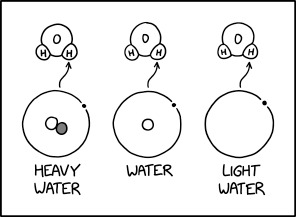
02:00 PM
Police In Guinea-Bissau Raid Offices Of Danish Anti-Vaxxers Planning CDC-Funded Unethical Study [Techdirt]
In all of our coverage of the disastrous tenure RFK Jr. has had as Secretary of HHS, we have not yet discussed a bonkers study the CDC planned to fund in Guinea-Bissau. This hepatitis B “vaccine trial” was supposed to already have been kicked off, but it has been suspended since January instead because of the plainly unethical methodology for the trial, combined with the understanding that the two researchers employed to run it are virulent anti-vaxxers.
The trial was suspended in January after its unethical design came to light and drew international outcry. Although the trial is still halted, staff of the CDC director’s office told the agency’s budget office in late September to set aside $1.6 million to fund the trial, according to a report by Rolling Stone. The money was to be pulled from funding for the CDC’s global health security programs, which might otherwise go toward efforts like combating the Ebola outbreak currently raging in the Democratic Republic of the Congo.
If the trial moves forward, it would be funded by the US but run by Danish researchers, who have separately been accused of misconduct. In December, the CDC announced the award of an unsolicited grant for $1.6 million to a research group at the University of Southern Denmark, led by married couple Christine Stabell Benn and Peter Aaby. The pair have produced numerous studies that have been promoted by anti-vaccine advocates, drawing concern and criticism from researchers. Stabell Benn and Aaby are currently under investigation by Danish authorities over allegations of “falsification” and “scientific misconduct” related to previous vaccine research.
So, what makes the design of the trial unethical, beyond the notion that the two researchers are known bad-actors on the topic of vaccines? Well, let’s start with the fact that this trial is not designed to study the efficacy of the hepatitis B vaccine at all. We already have plenty of data on that that suggests the vaccine is safe and effective overall. No, this study is designed specifically to find harmful outcomes from the vaccine. To do that kind of study, the researchers planned to enroll 14,000 newborns in Guinea-Bissau in the trial and give half of them the vaccine and withhold it from the other half to study the health outcomes of the children.
In case that didn’t land properly: The study is designed to knowingly expose 7,000 children to hepatitis B, which can have immensely deleterious long-term health outcomes if exposed.
But wait, you might say. Are these children that would otherwise have ready access to the hep B vaccine? The answer is, in large part, no they would not. The government in Guinea-Bissau is born of a recent coup and it’s ability to deliver on basic government services has been wanting, to say the least. But that does not, in any way, make this trial more ethical.
Stabell Benn and Aaby have argued that the trial is not unethical because newborns in Guinea-Bissau are currently not routinely given a dose of hepatitis B vaccine at birth. But outside experts point to ethical guidelines, such as the Declaration of Helsinki, which requires trials to provide the “best proven intervention”—which is a birth dose of hepatitis B vaccine—regardless of whatever the current standard is in the country hosting the trial. Placebos may only be used when there is no proven intervention or there is “compelling and scientifically sound methodological reasons” to withhold a proven intervention.
In a scathing rebuke in February, the World Health Organization laid out a bullet-point list of “why withholding the vaccine is unethical.” The WHO notes that the entire premise of the trial is based on “hypothetical safety outcomes without sufficient credible evidence,” which don’t justify putting newborns at risk. The agency also blasted Stabell Benn and Aaby’s defense of the trial, saying: “Resource constraints cannot be used to justify withholding proven care in a research study involving people. Ethical obligations require minimizing risk and ensuring a prospect of benefit for participants.”
RFK Jr. has a pattern building of this sort of thing. Emails released show that he almost certainly lied in congressional hearings about his adventures in Samoa in 2019, after which the country experienced a tragic outbreak of measles that claimed over 83 deaths. Brown people are fit for experiments designed to boost Kennedy’s ego, it seems.
The CDC recently planned to grant even more taxpayer money to Stabell Benn and Aaby, but they’ve now run into an even bigger problem that worldwide condemnation: a police raid by the government of the study’s offices.
Police in Guinea-Bissau raided the offices of Danish researchers on Monday, seizing doses of hepatitis B vaccine intended for a vaccine trial for newborns. International health experts have called the trial “unethical,” but anti-vaccine Health Secretary Robert F. Kennedy Jr. has attempted to fund it with US taxpayer dollars.
Now it appears that officials in Guinea-Bissau have opened an investigation into Aaby and Stabell Benn’s work. In a Facebook post Monday, translated from Portuguese, the judicial police announced they carried out a “search operation at the facilities of the Bandim Health Project in Bissau, which culminated in the seizure of a batch of hepatitis B vaccines intended for vaccination of children in the country.”
I’ll just say that I hope the government there has access to enough quality scientists to do a very thorough investigation as to what precisely is in the hep B vaccines that were intended for use in this study. I’d be very curious to know just what is in them. Call it a hunch.
But, regardless, it should horrify us all that our own tax money is being used to fund this kind of unethical study. The trolley problem is famous for a reason, after all, and the idea is not generally to want to purposefully put yourself at the switch in that problem. That’s precisely what these “researchers” intended to do, all to go looking for any evidence for a conclusion they reached long ago.